Showing posts with label seasons. Show all posts

Thursday, February 22, 2007

More Pagan Holidays - Imbolc and Yule


Imbolc


For many Neo-Pagans, Imbolc is the day of the Celtic Goddess Brighid, who represents the young sun. This High Day celebrates the coming of spring. The days are noticeably longer and signs of spring are beginning to show. For Imbolc, people cleaned their homes, celebrated the coming spring, and prepared for the planting season.


Since my hearth culture is Roman, my problem lies in capturing the essence of Imbolc in the Roman High Days. For Romans, February is a month of purification to prepare for the New Year in March. However, several festivals do combine to match the theme of the Celtic Imbolc.
The ancestors (Manes) were honored during Parentalia. Meanwhile, Qurinalia focused on the honoring of the citizens of Rome, the children of Quirinus. Lupercalia, sacred to Faunus, was a festival of much revelry and purification. His priests ran through the streets striking women with strips of goat’s skins, to encourage fertility. Later in the month was Fornicalia, honoring Fornax, the Goddess of Ovens and Bakers. During Her Festival, grains from the previous harvests were roasted in the ancient manner in ovens. This combination of purification, sexual revelry, and roasting grains captures the essence of Imbolc in the Roman hearth culture.


I have always enjoyed Groundhog Day, which oddly enough has its basis in German and Roman pagan practices. I have fun in watching the groundhog do his prediction. Spring is coming, and I need to get ready for it.


------------


Yule


Neo-Pagans celebrate the Winter Solstice as the shortest day and the longest night. This time is a time of fun and community building. People come together offering cheer and good will to each other. Doing sacred activities that echo down the ages, they light fires, bring in the holly, and decorate trees.


For the Norse, Yule was the holiest of the High Days. During the longest night of the year, the Gods were the closest to the people of Midgard. The Disir (female ancestors) were honored on this night called Mother’s Night. No spinning or weaving was done for the next twelve nights. At Yule, oaths were sworn, and the Runes read. The Yule Log burned all through this period.


In Rome, the Golden Age of Saturn was celebrated as the Saturnalia. During Saturn’s Rule of Latium, perfect harmony and prosperity existed as one. During Saturnalia, citizens causally mingled with slaves, freedmen, and foreigners. It was a time of partying and fun. The religious rite that opened Saturnalia was the removing of the woolen bands of Saturn’s statue. Then the statue was refreshed with oil. At the end of Saturnalia, the statue was wrapped again. At that time, Ianus (Janus) ruled the New Year. Saturnalia was the time of endings and beginnings.

Sunday, February 18, 2007

Meditation

Introduction

My meditation begins with divination. Depending on the season, it could be a layout of Tarot, Oracle cards, Runes, stones, or Ogham staves. (In the summer, I go on a nature walk and commune with the animals I encounter.) This helps me to attune to worlds beyond this one. For me it helps to flow with the energies of the season for the purposes of meditating.

I begin by laying out my divination cloth. Then I light a candle and stare at the flame to clear my mind. Once I do the spread, I study the omen. Then, I flow into the world of the spread and listen to the whispers. As that world of the Kindred is laid out before me, I hear their whispers and murmurs.

Winter

Since Yule time is when the Norse Gods are the closest to Midgard, I use the Runes. For me, the laying of the Runes is entering into the world of the Gods. Odin the All-Father, obtained the Runes at a great cost. Before laying out the Runes, I ask the Norns to help with my choosing.

The Runes are an alphabet, forming words that give insights from the Gods. Within each word are layers of meanings that create a sentence. In the depths of the sentences, whisper the voices of the Norse Gods, revealing Their Thoughts.

Also in winter, I use stones. Because this is the season of introspection and quiet, I can hear their voices without distraction. When they sing, “pick me”, I take the stones from a pouch. Then, I “throw” them and watch where they land on a layout of compass directions. (Each direction has a meaning: North-spirit, East-mind, South-body, and West-emotions.) Then I ask each one what they have to say to me. The stones tell me through their colors, shapes, and how they twinkle. I enter their world, and hear their songs. I discover their personalities as well. For example, uptight malachite sings its advice in a clear tenor.

Spring

In spring, life awakens from its slumbers and comes alive. The first to make themselves known are the flowers. Therefore, I use the “Flower Speak” and “Flower Spirit” oracle cards. “Flower Speak” employs pictures, while “Flower Spirit” uses photos to convey their meanings.

In the beautiful photos of “Flower Spirits”, the author has portrayed ‘the essence of each flower. I use these cards in early spring to remind myself of the world that awaits me. Because the deck is divided into annuals, perennials, bulbs, and wild flowers, this adds the dimension of various timelines. When I do a spread, it becomes a riot of color and movement. Each picture melds into the next, as the flowers dance and weave. I join them in their spirited dance.

The Flower Oracle has beautiful drawings of flowers with their representative meanings. The deck also includes the phases of the moon, and the phases of plant growth. This gives a sense of time of what is yet to come and how it arrives. In each spread, I travel from card to card absorbing the energy of each card.

Summer

In the summer, I go outside on a nature walk. On my morning walk, I encounter a wide variety of animals. I generally stop and commune with them. For example, encountering a garden snake, I stop and quietly breathe with the snake. In and out I breathe until I become one with the snake. Seeing life on the snake’s level, we converse about the warm sunshine and the local rat population.

On another morning, I watch the dragonflies at the forest edge. When a dragonfly alit on the fence, I started breathing with the dragonfly. Breathing in unison, I became a dragonfly, glowing bright blue and green. I flew with the other dragonflies eating insects on the wing.

Fall

In the fall, the trees change their leaves. To me, they speak about the passing of summer and the coming of winter. In this moment, time stands still. Therefore, I choose the Ogham staves and “Tree Magick” Cards to meditate with.

As the sacred alphabet of the Celts, the Ogham is related to the trees and plants of Europe. As I lay out the Ogham staves, I hear the voices of the Kindred murmuring through the trees. The Ogham letters form words in tree language. Elms speak of stretching to the sun, while oaks talk of strength. As I meander among the staves, I feel the Divine Ones speak to me.

In “Tree Magick”, the trees of the world are separated into ‘heaven’ and ‘earth’ trees. Also, each card has a tree with an animal about it. In exploring the world of each card, I enter into the being of the tree. Using this deck becomes a way of exploring the Two Powers, especially when the heaven and earth trees come together. Moving from earth to heaven (and back again) helps me to embrace and mingle the Two Powers. The trees merge their energies into a whirlpool. I become a leaf flowing in the pool, going where the trees take me. Finally I release the energy and come back to me.

Saturday, November 11, 2006

Samhain or Winter Nights


During the months of October and November, European peoples perceived that the veil between the living and the dead was the thinnest. The Norse of Northern Europe honored their Ancestors. The Celts held their New Year’s rituals at this time. Meanwhile in Rome, the Mundus (the Gate to the Roman Underworld) was opened once in October and in November.

At this time, the Celts had their New Year, called Samhain. They regarded this High Day to be the beginning of the Dark Half of the Year. It was the time that cattle were brought in from the fields for the winter. During Samhain, the Celts connected with their ancestors.

Meanwhile, the Norse held their Winter Nights. Through stories and rites, they honored the Ancestors. At night, Woden (Odin, the All-Father) or Frau Holda rode with their hounds. Searching for souls, these Gods pounded through towns and farmsteads. During the Wild Hunt, everyone stayed inside.

In October and November, the Romans opened the Mundus. During this time, people were told not to conduct major religious rites. The Dii Infiri (Underworld Gods) and the dead were about, and could do serious harm.

For me, Samhaim is the last leaf of October. In New England, the brilliant colors of the mountains become dark green and grey. For a brief moment, time and space ceased to be. I could step outside and feel the Spirits.

Friday, November 03, 2006

Seasons: Midsummer - Autumn Harvest

Midsummer

Midsummer is when the sun stands the highest in the sky. Daylight dominates, and the night is short. Then, the night reclaims its due.

In the past, on Midsummer Eve, people gathered herbs for healing. (Plants of the wort family were especially prized.) For more healing and cleansing, people then bathed in various springs. After the Midsummer bonfires burn out, people gathered the ashes to mix with water. Then, they sprinkled this ‘glop’ around their houses for protection in the coming year.

To the Norse, Midsummer was as important as Yule. At this time, the Norse gave thanks for the prosperity and fertility of their lands. Also, they prayed for continued prosperity and good health. Sunna (the sun) was honored at Midsummer, as well as Balder (the God of Light) and Nanna (His Wife).

For me, Midsummer is a bittersweet High Day. Because of my on-going depression, I crave the sunlight. At Midsummer, the sun is at its peak, and then daylight lessens gradually. Midsummer is time of joy tempered with the shadow to come.

Lammas / Lughnasadh

Several Indo-European cultures celebrated their first harvests of grains and fruits in August. For example, the Anglo-Saxons of England had Lammas (“Loaf-Fest”), to offer their grain to their Gods. At Lammas, the Anglo-Saxon tribes met in their assembly (the Thing). At the Thing, they held discussions, swore oaths, and enacted laws. Afterwards, everyone celebrated the sacred marriage of Thunor (Thor, God of Farmers and Thunder) and his wife Sif (Goddess of Grain). After offering breads to the Gods, the Anglo-Saxons competed in warrior games in Their Honor.

Meanwhile, the Celts held Lughnasadh festivities to celebrate the marriage of Lugh (Master of All Skills) and the Lady of Sovereignty. This High Day was also the staging of funeral games for His Foster Mother Taithe, (the Goddess of Agriculture). (She had dropped dead from plowing a field in Ireland.) After offering the first fruits of the harvest to Her, the Celts held their games.

For me, the county fair is a faint remnant of First Harvest Holidays. My family often attended the Skowhegan Fair in Maine, where livestock, breads, and other agricultural items were featured. One of my favorite activities was watching the horse pulling contests.

Fall Equinox (Second Harvest)

Around the Fall Equinox, farmers began the second harvest of their crops. After they harvested their grains, farmers left one sheaf of grain. Afterwards, they ceremoniously cut it, and made dollies from the sheaf.

Among various Northern I-E Cultures, the Spirit of the Corn (wheat) resided in the last stalk. As containers of the Harvest Spirit, the dollies were given a place of honor in their homes. People kept these fertility symbols through the winter.
For the Norse, the Fall Equinox was called “Winter Finding”, when people gave thanks to the Vanir (the Gods of Fertility and the Land). The Anglo-Saxons called this High Day “Harvest Home.” For them, it was a time of thanksgiving, and for asking for plenty in the future.

For me, it is the start of fall hunting season. The deer are fat and rutting. Other animals are eating to put on winter fat. Plump squirrels are seen everywhere gathering nuts for the winter. This is the time for gathering meat for the lean times. As part of the second harvest, I also gathered vegetables from the family garden, before the first frost.

Tuesday, September 19, 2006

Bumble Bees Still Bumbling Along

Eventhough it is fall, bumble bees are still gathering honey from flowers. They are slower but they are still doing their bumble bee thing.

Here is more on bumble bees from my site:

Bumble Bees are large robust Bees with the color patterns of yellow and black. You can usually find Bumble Bees flying low to the ground or on flowers collecting food. They nest almost anywhere but only remain in one particular nest for a year.


Besides size, another way that you can tell how Bumble Bee is different from Honey Bee is that Bumble Bee's nest is a mess. Bumble Bees have fewer members in their colonies than Honey Bee. Also, They do not store large amounts of honey. Unlike Honey Bees, Bumble Bees rarely sting unless their nest is threatened.

Enjoy watching these fairly placid Bees as They go about their business of pollinating the flowers. Learn from Them to mind your own business. Just do not be messy in your affairs.

Animal Teachers: Bumble Bee

Tuesday, September 12, 2006

"An Interesting Day at Rainbow Bridge"


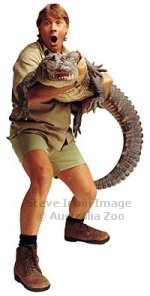
"Steve Irwin Holding A Croc"
(Copyright: Australia Zoo)

This is written by Epona-Bri of the Animal Spirits Yahoo list.

Copyright Epona-Bri, 2006

Rainbow Bridge is a place of both peace and anticipation as departed pets await their beloved owners.

There are plenty of things to keep them contented while they wait: trees you can't get stuck in, endless meadows, splashing streams, thickets perfect to hide in for pounce-attack games.

But one day the residents noticed some rather...unusual newcomers arrive.

The koalas and the kangaroos slipped in rather quietly, but then came the bearded dragons, the skinks and the goannas. The influx of snakes startled an entire family of cats up a tree. Pythons, cobras, tiger snakes, brown snakes and even fierce snakes. There were so many at one point, it seemed the ground itself was alive with
writhing. A burly wombat shouldered his way through the crowd and plopped down in a shady spot, barely missing a Jack Russell terrier who yapped indignantly as he abandoned his position.

And then the crocodiles showed up.

Finally, a Great Dane managed to get up enough nerve to approach one of the reptillian giants.

"Um....excuse me," he said hesitantly. "But why are you all here?"

The croc dropped her jaw and laughed. "Same as you, mate," she said. "Waitin' for someone who loved us."

The dogs, cats, gerbils and other "typical pets" looked at each other in confusion, then at the plethora of weird, ugly and downright deadly creatures assembled. Who on Earth could possibly love some of those faces?

"I see him!" shouted a green mamba from his vantage point in one of the trees. A cacophony of squeeks, hisses, bellows and roars erupted as the mob surged forward toward a lone human walking across the field toward the bridge. The other animals managed to catch a glimpse of him before he was overwhelmed by the crowd.

"CRIKEY!" he shouted joyously right before he was bowled over by the wombat.

"Well I'll be," said a Persian as she tidied up her fur. "It's that Aussie my human liked to watch on TV. Had to be the craziest human on the whole planet."

"Oh, please," remarked an echidna as he hurried by. "Is it really that that crazy to passionately love something Goddess made?"

--------------

Visit the Australia Zoo webite: http://www.crocodilehunter.com.au/

Sunday, April 09, 2006

It's Spring!

It's Spring, and I am back. The cardinals have set up a nest behind my building. We are watching ladderback woodpeckers decide where to put their nests. The starlings are fighting over nesting places.

Bumble bees have made it up to my balcony. It is so strange to see these insects so high up. Big and round. Lazy flyers.

Monday, January 23, 2006

More Buzzards in Northern Virginia

Buzzards have taken over several suburban towns. They roost in trees and on house tops. The buzzards have spooked everyone around. However, the Commonwealth has told everyone that buzzards do not eat dogs or cats. Their poop is clean, too. However, people are still afraid. It has to do with how the birds look. Bald heads, beady eyes, wide wings. Then there is the hissing.

I think that buzzards have had a bad rap. People should appreciate buzzards for what they do. These birds are nature's clean up crew.

Saturday, January 07, 2006

New Year and the Same Woodpeckers

I have been absent for a month for very good reasons - I have been very ill. Now that I am better, I am back blogging. Now if there are anyone out there still reading, I will be in business.

I have put out fruit and corn chips for the birds. The same woodpecker keeps coming and pecking at the fruit. I never knew woodpeckers ate apples and pears. They also eat the corn chips. How they do that with their long bills is beyond me. I see them peck the fruit and spear it but eating? More watching of woodpeckers is needed to solve this mystery.

Sunday, December 04, 2005

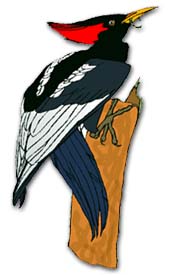
A Woodpecker's Scold


Yesterday, I heard a ladderbacked woodpecker actually make a noise, other than drumming. The woodpecker was making noise like a rusty gate. He was scolding a squirrel that kept getting in his way on a tree. Apparently the squirrel was on his favorite spot and wasn't going to move. The woodpecker threatened with his beak and the squirrel moved.

“Woodpeckers are good signs. They are symbols of wealth, good luck, happiness, and healing. If you hear or see a Woodpecker pecking on a tree near your house, thank him for the message and gift.” Copyright: “Spirits of the Earth”, Bobby Lake-Thom.


from "Animal Teacher's Woodpecker Family:
Woodpecker Family’s Wisdom Includes:
Protecting the Trees
Thunder and Lightning
Purposefulness
Power of Discrimination
Being Intense But Relaxed
Curiosity
Being Intense but Graceful
Waging War and Sudden Attack
Attention to Detail

Sunday, November 27, 2005

Buzzards in the Sky


Saw several turkey vultures circling the sky over the Ocaquan River. They were massive birds floating on the warm currents. I kept wondering why these beautiful birds (on the wing) got such a bad rap. I guess what I was watching was a group of vultures playing.


Circling vultures do not necessarily indicate the presence of a carcass. Circling vultures may be gaining altitude for long flights, searching for food, or playing.

A group of vultures is called a "Venue". Vultures circling in the air are a "Kettle".


+ Vulture poop is actually a sanitizer! Their uric acid is so strong (because of the nature of their diets) that it kills bacteria.

From the Turkey Vulture Society

“Turkey vulture can assist you in developing your own sense of smell that you can use effectively in all areas of your life. It will help you to decide whether or not something doesn’t quite smell right in your life.” Copyright: “Animal-Speak”, Ted Andrews.

Thursday, November 17, 2005

Charles Darwin's pet tortoise turned 175


Charles Darwin's pet tortoise turned 175 yesterday. That is a long
time even in "turtle years". Harriet came scampering out of her
tortoise shell in 1830. That was the same year that Joseph Smith
published "The Book of Mormon", and the same year as Emily Dickenson
was born and the year that Edwin Beard Budding invented the lawn
mower, which being a vegetarian might have been of more interest to
Harriet.

Harriet was only 5 years old when Charles Darwin saw how cute she
was and he put her in his cabin aboard the HMS Beagle. When they
got to Australia Darwin was probably afraid that their sailing ship
might get becalmed in the "horse latitudes" or in the Saragossa Sea
and then little Harriet would surely end up in the stew pot; so
Darwin left little Harriet in Australia; where she has been ever
since munching the veggies and lettuce that her keepers gave her.

She was 18 when the German Rune master Guido von List was born.

She was 29 when the world's first oil well was drilled.

She was 35 when the American Civil War ended.

She was 49 when Thomas Edison invented the light bulb.

Harriet was 78 years old the last time the Chicago Cubs won the
World Series, (though it may of course be impossible for any
creature to live long enough to see the Cubs win another World
Series).

Harriet was 81 when Ronald Reagan was born.

She was 139 when men first landed on the Moon, and yesterday Charles
Darwin's pet tortoise Harriet turned 175 years old.

Copyright: Edward A. Anderson II

----------------------------------

Turtle's Teachings:

"Since Turtle carries its home on its back, it has also been recognized as having the ability to 'manage' in difficult circumstances. Turtle has good hearing and can sense movement in the water through the membranes in the skin. Turtle even has a sense of smell and pretty good eyesight, reminding us not to judge any of our relations by outward appearances." Copyright: Unknown.