Wednesday, July 18, 2007

Teachings of the Sea Turtle


GREEN TURTLE

Perseverance


(U.S. Forest Service)
One of the largest of the Sea Turtles, Green Turtle likes living in warm, shallow waters where sea grass, Her favorite food, grows. She locates the vegetation with Her excellent underwater eyesight. Swimming at great speeds underwater, She travels near the coasts in search of sea grass.If you find Green Turtle far out to sea, She is on Her way to Her nesting beaches. She is meeting the male Turtles there for mating. Both male and female Green Turtles return to the same beaches year after year. Usually, these beaches are the same ones from which the Turtles were hatched.


Although Mother Green Turtle is awkward on land, She still comes up on the beach to build Her nest. Mother Turtle drags herself on to the beach to dig a large hole with Her flippers. Once She lays Her eggs, Mother Turtle pushes sand over the eggs. Then, She hauls Herself back over the beach to the sea.


Green Turtle teaches perseverance. Watch Her as She struggles to lay Her eggs. Graceful in the sea, Mother Turtle comes on land, an alien hostile environment, to provide a nest for Her young.


Green Turtle’s Teachings Include:

“As about, so below, and within. The gentle turtle acknowledges the delicate balance between ocean and earth, and reminds us of the importance of respecting both.” Copyright: “Wisdom of Australian Animals”, Ann Williams-Fitzgerald .


Green Turtle’s Wisdom Includes:

Home

Being Grounded

Healing Knowledge

Respect

Persistence


Friday, July 13, 2007

Mockingbird by Sayahda

The Mockingbird

The Northern mockingbird is approximately 10 inches inlength with a long tail that twitches vigorously when excited. It has strong legs suited to scratching through dead leaves and underbrush for insects. Although their dull gray color doesn’t impress the eye their various calls definitely demand attention. Known for their songs the mockingbird was given its name because of its ability to mimic the calls of other bird species. In Latin the word mockingbird means “many tongued mimic.” The song of mockingbird is a medley of calls of many other birds. They are master imitators and usually repeat an imitation several times before they start another song in rapid succession. They are one of the few birds that sing while in flight.

Mockingbirds hold a variety of teachings. On a subtle level they show us how to mimic ourselves. What we mimic reflects back to us and helps us see what we truly are. Discovering oneself in this way can be a powerful transformational experience. Those with this totem should ask mockingbird to help them connect with their personal sound frequency. Once this connectionis made healing on all levels takes place. It is common for an individual bird to have as many as 30 songs in its repertory. It can also mimic the sounds of barking dogs and cats.

They teach us about the power of the voice through song. Appearances are not important to those with this totem. They are always heard before they are seen, if they are seen at all. Those with this medicine can learn new languages easily and make excellent interpreters and spokesman. Mockingbirds are fearless and will defend their nest and territory. Courageous birds they will dive and attack intruders that come too close. They teach us how to develop confidence within ourselves, sing out our truth and stand up for what is rightfully ours. http://www.sayahda.com/cyc3.html

Thursday, July 05, 2007

From Nature to Myth: Owls and People


Owls spark people’s imaginations. These silent predators of the night both inspire and frighten people. For nighttime, when owls are most active, is also when magic is afoot. To many people, seeing these shadowy birds with their glowing yellow eyes is to experience the Other Worlds.
This worldwide Order of Birds ranges from tiny elf owl of North America to huge eagle owl of Eurasia. As predators, owls regard anything that moves as fair game. While elf owl eats insects, eagle owl feasts on deer. Because most owls fly at night, they occupy the same niche in the eco-system as hawks and eagles. Native Americans called the Owl Family “Night Eagles”.


Owls are divided into two families-True Owls (Strigidae) and the older family of Tytonidae, to which only barn owl and bay owl belongs. Barn owls can be thought of as the more ancient version of “Owl”. They do not hoot like true owls, but instead make a hoarse “Khurrew” noise. In addition, they have heart-shaped faces, longer beaks and heads, and forked tails. Barn owls live in Europe and the Western Hemisphere, and bay owls live in Africa, Southeast Asia, and Australia. This makes the Barn Owl Sub-Family, one of the most widespread land birds in the world. The round-headed owls, that most people see, are from the larger Strigidae Family which contains 300 species.


Because so few birds are nocturnal and the majority of owls (Strigiformes) are, most people respected but distrusted them. The Japanese regarded barn owl and horned owls as demonic. In Borneo, Scops owls were thought of as ill omens to be avoided at all costs. The Romans believed that any owl sucked the blood of babies.


However, the ancient Greeks welcomed little owl as their Goddess of Wisdom’s Friend. In Hawai’i, Pueo (Hawaiian Owl) is a protector. As ‘Aumakau, Pueo is the ancestor guardian who watches over the family. Because barn owl saved Genghis Khan from his enemies, Mongolians revered her. Meanwhile, the Celts look upon tawny owl as one of the five oldest animals on earth.
For owl empowerments and other animal consultations:

Saturday, June 30, 2007

Otters on youtube

Hi everyone,

"Ferrets have a golden rule that we humans could teach to our sons and daughters,
Do unto Otters, as Otters would do unto you."

This is on youtube - a short video of sea otters holding paws by Cynthia Holms, taken 5 years ago. I watched it several times and it was truly remarkable. The otters were not simply floating or rafting together. I thought it was great.

Watch the whole 1 minute and 40 seconds, it is not an accident these otters are holding hands!http://www.youtube.com/watch?v=epUk3T2Kfno

The otters are Niack (She is a survivor of the Exxon Valdez Oil spill) and Vido, of the Vancouver Aquarium.

Otters at the Otter Trust, Earsham, Suffolk, UK

Watch European Otters play and eat and swim to music (not the otters, the sound on the tape.)
http://www.youtube.com/watch?v=yjBN3etmHwY&NR=1


Baby otter learning to swim:
http://www.youtube.com/watch?v=2bnnKKltKLQ&mode=related&search=

Thursday, June 28, 2007

Midsummer

Midsummer is when the sun stands the highest in the sky. Daylight dominates, and the night is short. Then, the night reclaims its due.

In the past, on Midsummer Eve, people gathered herbs for healing. (Plants of the wort family were especially prized.) For more healing and cleansing, people then bathed in various springs. After the Midsummer bonfires burn out, people gathered the ashes to mix with water. Then, they sprinkled this ‘glop’ around their houses for protection in the coming year.

To the Norse, Midsummer was as important as Yule. At this time, the Norse gave thanks for the prosperity and fertility of their lands. Also, they prayed for continued prosperity and good health. Sunna (the sun) was honored at Midsummer, as well as Balder (the God of Light) and Nanna (His Wife).

For me, Midsummer is a bittersweet High Day. Because of my on-going depression, I crave the sunlight. At Midsummer, the sun is at its peak, and then daylight lessens gradually. Midsummer is time of joy tempered with the shadow to come.

Monday, June 18, 2007

My connection with Nature (2)

How do I live on the earth right now? I live modestly in a garden condo. I do not feel the need to have a bigger house. I dislike clutter, and strive for simplicity.

Clutter comes in many forms. Financial clutter is when you overspend to feel good. Demanding more and falling behind in payments has a cascading effect. The things no longer please you, and they take up valuable space. You accumulate debt, and more things. After awhile, you become trapped, unable to function as the debt piles up. You think that a bigger house is the answer. Of course, that eats up more resources both financial and physical.

Body clutter is when you over focus on food. You demand food in fashion or out of season. This uses up scarce resources like the rainforest and oceans. The transportation system becomes congested with shipping more and more food. More land is only used for roads. Moreover, the air becomes more fouled as more trucks put out exhaust. Buying food in season focuses on replenishing the local resources.

Tuesday, June 12, 2007

My connection with Nature (1)


My connection with Nature is complex. Although I live in an urban area by the railroad tracks, I am surrounded by nature. For me, the various plants and animals have adopted this unnatural place.

The oak and maple trees behind my garden condo shade my small balcony. A little intermittent stream appears when it rains between the two garden condo buildings. The rocks, lining the stream, provide places for snakes to sun themselves. Of course, there are the squirrels, who nest in the trees.

How do I honor the earth? I do it in small ways. The local woodpeckers bother the neighbors with their noise. They like to drum on the gutters at daybreak, waking everyone up. I teach the neighbors the names of the various woodpeckers in our neighborhood. (We have Pileated, ladder-backed, downy, and hairy.) I think that my neighbors will appreciate these birds. One elderly man now refers to them as the ‘big bird, middle bird, and small bird.’

Also, I am known as the snake lady. Often, I will see someone with a shovel ready to whack a snake. I scream, “DON’T KILL THAT SNAKE! IT EATS RATS!” They generally thrust the snake and shovel at me, demanding I get rid of it. I usually take the snake to the local wildlife rescue person.

Wednesday, May 30, 2007

Sky and Earth Powers

In Roman Cosmology, the Sky is the traditional province of the Dii Consentes (The Council of Twelve Gods). In the Roman mind, the powers of the Sky were just and right. The Romans sought to divine the will of the Dii Consentes from birds in flight and other sky omens. Iuppiter, Optimus and Maximus (Jupiter, the Supreme Sky God) signaled His Will through thunder and lightning.

In Rome, the Sky Power supported civic society. Iuppiter’s temple was the center for Roman politics. Victorious generals made sacrifices there as well. In the Roman worldview, the Sky Gods with the Senate and the People governed Rome.

Meanwhile, the Earth was the province of the Dis Pater, God of the Underworld. Under His Rule, the earth is chaotic and dark. For that reason, the Mundus (Well to the Underworld) is only opened three times a year. Once the Mundus is opened, Dii Inferi (The ‘Infernal Ones”) move about. For that reason, these days are considered to be unlucky.

However, the Earth Power used sacred snakes to convey prophecies to to the people. Caves and grottos were his sacred places. The Dis Pater not only ruled the Underworld but also governed wealth and riches. Meanwhile, the Penates, guarding the family’s food stores, lived in underground chambers.

In the Roman sense, the mingling of the Two Powers is one of order working with chaos. Snakes, associated with various Gods, crawled out of caverns offering omens. Lightening bolts from the skies were more signals of Divine Will. The powers of Earth and Sky mingle, but then separate.

As the Sky and Earth Powers mingled, it was for the good of the Roman people. The Sky brought the governing power and the Earth brought riches and kept people safe. Together, they supported the people of Rome.

Monday, May 21, 2007

Sharks in Danger!

Sharks are not glamorous subjects but without them, our oceans would become cesspools. Take a look at the website in the following post. Shark cartillage has no medicine value. It will not cure cancer. Don't eat shark fin soup - taking of the shark's fins is cruelty to animals.

-----------
Hi,

I found your website through the Shark Webring and thought you or your family might be interested in this story about sharks from Conservation International:
Preying on Predators: Shark Tagging Data Will Guide Conservation Policy, Efforts
"Contrary to popular belief, sharks are not preying on people as much as people are preying on sharks. Millions are harvested every year, primarily to fill a ravenous craving for shark fin soup."

The story describes the plight of sharks endangered by the demand for shark fin soup and the efforts of scientists to learn how to best protect them by shark tagging. There are maps of the sharks' movements, photos, and video.

Learn more at:
http://www.conservation.org/xp/frontlines/2007/03260701.xml

Please consider adding this link to your website to help spread the word!

Cheers,
Lindsay Walter-Cox
l.walter-cox@conservation.org
Conservation International

Friday, April 13, 2007

Mythic Animal Teachings


Pegasus:

He can guide us through dreams and astral travel experiences, as well as meditation. As directed by the Muse of Poets, he brings inspiration, teaching us how to express ourselves eloquently.

Unicorn:
As a symbol of innocence, gentleness, and purity, they often tell us it is time to find those things within ourselves and see through childlike eyes in order to rediscover our personal sense of wonder at all the beauty around us. Also they help us to find and develop our individual power and then nurture it carefully.

Dragon:
Dragons represent the supernatural, and infinity itself and help us to understand both. They help us to find andcreate change and transformation and aid us in spiritual growth. Dragons represent ageless secrets and ancient energy, and can be helpful in working with those things.

Tuesday, April 10, 2007

Persistence as a Virtue

Persistence:
The ADF defines persistence as “the drive, motivation to pursue goals even when that pursuit is difficult.”

Virgil’s “Aeneid , the great epic of Rome’s founding, celebrates persistence. Writing of the voyages of Aeneas to find a home for his people, Virgil sought to codify the beginnings of Rome in an epic poem. However, Virgil died before finishing his “Aeneid”. Personally, I think that the “Aeneid” celebrates not only Aeneas’ persistence but Virgil’s as well.

After the Greeks destroyed Troy, Aeneas took his people on a journey find a new home. While searching, he was constantly harassed by Juno, the Queen of the Roman Gods, who bore a grudge against his mother, Venus, the Goddess of Love. While the two Goddesses sparred, Aeneas coped with the death of his father, shipwrecks, and attacks by vicious harpies. Finally, he landed in Italy, where his dead father had told him to go. However before Aeneas could settle, he has to fight the Latins and other local Italic peoples.

In my life, doing the family laundry exemplifies persistence. Every week, I have to walk two blocks to the laundry room in my complex. (Parking is not allowed in the area.) Carrying the soap and my bags, I walk in all types of weather. Furthermore, the laundry room of my complex is freezing in the winter and stifling in the summer.

Thursday, April 05, 2007

The Chinchilla

The Chinchilla

by Sayhada

A member of the rodent family, the chinchilla has big eyes, round ears and thick silky fur. Because of their beautiful fur they are captured and bred by the fur industry. It takes over a hundred chinchillas to make one fur coat. Unfortunately supply and demand could lead to its extinction.

Chinchillas have a persistent undying curiosity and will explore every nook and cranny of their surroundings. The like sitting high up as if to observe the world below. Once they feel an area is safe for them to enter they explore it with a sense of adventure and innocence. Their observation skills are acute. They instinctively know when to act and when to retreat. Chinchillas teach us the importance of timing. Those with this medicine intuitively know the right time to act and the right course of action to take, although caution is advised not to become too analytical. Balancing observation skills with a sense of innocence is an important lesson.

Naturally robust and hardy the chinchilla has an extremely sensitive yet effective digestive system which is designed to extract the most out of its food. It does not have a vomit mechanism like other animals and is unable to expel bad food out of its system. This serves as a warning to those with this totem. Good nutrition, a proper diet as well as physical exercise is a necessity for optimum health. Difficulty in eliminating toxins from the body can lead to many health problems.

The chinchillas predominate form of communication is the variety of sounds it makes. Each sound relays a specific message. When upset it chatters its teeth, when nervous it lets out a shrill squeal, when agitated or alarmed a sequence of loud high cries is heard. If it is hungry it will make a rasp like snarl. It knows how to use its voice to convey a message and teaches us the art of efficient communication.

The chinchilla is an important messenger that demands respect. It requires us to heed its advice. If we choose to listen it will serve us well. If we don't honor its message it will scamper away and find someone else to help. When it appears in your life ask yourself the following questions.

Do you need to apply more discernment in your life to avoid chaotic situations? Are you using your observation skills to help you reach your goals? Do you take the joy out of an experience by over analyzing it? Does the wonder and magic of life still excite you? Does your health need attention? Do you communicate effectively with others?Although the chinchilla holds a variety of messages one thing is certain. When it appears in your life something is out of balance that needs to be corrected immediately.

Tuesday, April 03, 2007

"A History of Pagan Europe"


Prudence Jones and Nigel Pennick, “A History of Pagan Europe”, (Routledge U.K., 1995, Reprint 2005, ISBN 0-415-15804-4)

People new to Paganism will benefit greatly from this book. By tracing Pagan religious history from early Crete to modern Europe, Jones and Pennick introduce people to the depth of Pagan philosophy. By placing the European peoples in their Pagan religious milieu, the authors eliminate various Christian filters. Unlike many other books, Jones and Pennick do not assume that monotheism is the epitome of Western civilization.

By detailing Christian versus Pagan thought, the authors give the readers a solid grounding in Paganism. In discussing Roman piety, the authors write, “Interesting the Latin word superstitio simply meant religious practice which was outside the State rituals…private religion which could well be duly registered…. The Romans regulated people’s actions; the Greeks with finer sophistication, also judged people’s attitudes,” (p. 49) What I conclude from this is that Pagans usually regarded the structure of worship to be the most important.

This book expands on the tensions between Pagans and Christians. Two concepts in the Christian religion put them on the offensive. As a rule, Pagans were tolerant of other Pantheons, as long as the State Gods were properly honored. Christians, on the other hand, regarded the belief in any God but theirs (heresy) was a sin. Sin, another alien concept, baffled many Pagans. People break laws but they do not ‘stain their souls’. To “save” them, Christians had to forcibly convert Pagans.

What surprised me is the durability of Paganism. Instead of disappearing, it forced Christianity to adapt to it. For example, many early Christian saints are Pagan Gods in disguise. Many Pagan customs are intertwined with Christian holidays. Few Christians, today, know that many of their holidays are Pagan High Holidays, with a Christian flavor.

After discovering the varieties of various Pagan faiths, the reader takes heart that people can go back to their ancestral faiths. The history of Paganism in Europe is a fascinating one. Rather than the progression to monotheism that many histories present, this book shows how Pagan philosophies borrowed from each other. Each had their own specific focus but adapted from others. Celts borrowed from the Romans, while the Finns borrowed from the Norse. The Gods remain eternal, worshipped in Their various Aspects by peoples.

Thursday, March 29, 2007

Swan Teachings


SWAN
Symbology: transformation, loss of innocence, beauty


The painting of a swan maiden represents a common motif found in the mythologies and folktales of many cultures around the globe – from Native American to Slavic. Although the story varies from place to place, the basic plot is the same: a young man finds the feathered robe or skin of a swan maiden – a goddess-like creature – which she ahs temporarily shed to assume a human form. Although the youth attempts to hide the feathers from the maiden, which allows him to possess her, the swan finds its feathers, assumes its animal form, and leaves the youth. The lost swan thus symbolizes the departure from youthful innocence and the passage to maturity. In some versions of the story, the swan dies. In Greek mythology the "swan song" is the beautiful song sung by the swan just before death.


From: Animal Spirit Knowledge cards


To the Ancients, all things in nature had a sacred or spiritual meaning. The world was inhabited by the higher beings, who took the form of fantastical creatures that were part animal, part human, and exceedingly powerful. These beings are the spirit guides who lead the departed to the next life, heal the sick, and restore balance and harmony to a troubled world. The tribal healers knew the animal spirits well. The journeyed beyond the threshold of ordinary reality to invoke the power of these great beings.

---------


The 48 paintings by Susan Beddon Boulet (American, b brazil 1941 –1997) reproduced in this deck resonate with an ethereal energy and speak the language of the soul. Each image is accompanied by a brief description of the animals’ power and symbolism in various cultures.


Animal Spirit Knowledge Cards
Text by John Nagiecki
© The Susan Eleanor Boulet Trust
catalog number K152
Published by Pomegrante communications Inc.
Box 6099, Rohnert Park, CA 94927


---------------


Read more about the Swan Family at Animal Teachers

Friday, March 23, 2007

More Animal Predictions

Whatever occupation one has, when he hears the frogs croak for the first time in the spring, will be one's occupation for the entire year.

Make a wish when you see a spider spinning a web and the wish will come true. If you see a brown spider crawling around on any clothes in your closet, don't brush it away! The spider means you will be getting new clothes.

A bee flying into the house means a stranger is coming.

If you say "mumbly up" repeatedly over an anthill, the ants will come up out of the hole.
Saying "mumbly down" makes the ants go back down.

It is lucky to have a snake live in, near, or under your house.

When you see a crow for the first time in a new year, observe its flight-- that will indicate the distance you will travel that year. If the crow just sits there, it means no journey; if it flies out of sight, it means you'll take a very long journey.

Monday, March 19, 2007

"Plants as Spirit Helpers"

"The Shaman Way: Plants as Spirit Helpers"

By Shaman Elder Maggie Wahls

A Shaman learns to use the assistance of animals in journeying and in healing, but also enlists the power of plants - as spirit helpers. Plants are a powerful source for healing. All things on this planet garner their power from the sun and as plants live and breathe the sun, they as a whole have much to offer. Plants however live at a lower vibration than people or animals. They move more slowly and can have a much longer life than humans in some cases such as the giant sequoia. So their power is used for longer methods of healing just as the herbologist prescribes doses of tinctures for several days.

How do you choose which plants to work with?

Each plant has a particular kind of power to it. Some plants are for growth and some for retardation, some for light and some for dark. Each plant has two sides to it as well. The outer side - that which you see with your physical eyes; and an inner side which you can learn to see with your inner eyes. Sometimes the inner side is not a plant at all but an insect or some other being.

The Inner Side of Moss

I was walking in a strange forest far away from my home as a young girl enjoying the day and not paying attention to my path. Suddenly the sun disappeared behind a dark ominous cloud and I realized that it would soon be storming and worse than that, I was lost! I began to run in the direction I thought would take me home. But it just went deeper and deeper into the dark forest where the trees were now being whipped back and forth by the rushing wind. Leaves blew across my face as the sky turned darker and darker. The rain started to come down in a hard pelting that hurt my bare skin and I knew I had better take cover and try to remain calm. I found an open trunk of tree, hollowed out by a lightning strike many years before that offered some shelter now so I jammed myself inside and began to cry at my situation. I recognized the moss growing inside the tree trunk as the same moss my mother used for a soup we all liked very much. I wished I could go right now and take some of this moss to my mother and she would make us all a hot bowl of soup. I looked again and there were little green people standing in the moss no bigger than the moss itself and I told them to get my mother. I must have fallen asleep there because when I opened my eyes my mother and father were lifting me out of the tree trunk. We went home and my mother had prepared the moss soup earlier in the day for our supper. It never tasted better than it did that day!

Copyright © 2007 Shaman Elder Maggie Wahls. All rights reserved.

Excerpt from her online Shamanism course
Discovering the Shaman Healer Within: Apprentice Course.
http://www.selfhealingexpressions.com/course_overview_24.shtml

Tuesday, March 13, 2007

Animal Lore

Saying "white horse" seven times will help you find a lost article.

Saying "white rabbit" on May 1st will bring good luck the rest of the year.

If when starting a journey, you see a rabbit cross your path, it will bea safe journey.

If a squirrel runs across the road in front of you, it means good luck and wealth are soon to be yours. (Be careful not to run over the squirrel. Very bad for the squirrel.)

Buzzards are a long time in between wing beats. So if you see a lone buzzard, make a wish before he flaps his wings and your wish will come true.

Sunday, March 11, 2007

Courage in Norse and Roman Myths

ADF defines courage as “Acting appropriately when faced with danger.” This is more than just being brave. Courage also includes acting rationally. In Norse and Roman mythology, two similar myths show that both cultures defined courage as ADF does.

Tyr, Norse God of the Thing and Justice, lost his right hand to Fenris, the Great Wolf. An offspring of Loki, Fenris was known as the devourer. To prevent the destruction of Asgard, the Gods had to leash him. However, Fenris only trusted Tyr, and asked the God to prove that nothing awful would happen. So the God put his right hand into the wolf’s mouth. When Fenris was leashed, he bit off Tyr’s hand. Afterwards, Tyr became known as the One-Handed God for his sacrifice to the greater good.

During the Roman-Etruscan War, Lars Porsena, the Etruscan king, laid siege to Rome. An ordinary citizen, Gauis Mucius, went to the Roman Senate, and volunteered to end the siege by killing the king. Unfortunately the Etruscan king caught Mucius. To demonstrate Roman fortitude, Mucius put his hand in the fire. Lars Porsena, not only admired his courage, but was also unnerved by his actions. The king let Gauis Mucius return to Rome. Afterwards, Lars Porsena decamped, ending the siege.

In these myths, courage is tempered with reason. By volunteering for a greater good, both Tyr and Mucius both lost their right hands. Afterwards, they both had to learn to live life one-handed. They displayed quiet courage, going about their business not completely whole but coping nevertheless.

Thursday, March 08, 2007

March is a Tough Month For Wildlife


"Tough Month For Wildlife"


From E-nature.com


Copyright 2007


"March is the most difficult month of the year for birds to find adequate food to survive winter in most of North America. That’s because the supplies of natural food....last year’s seeds, fruits, berries and insect eggs and larvae...are at their lowest levels after months of birds feeding on them. March is too early for a new crop of seeds, fruits, berries, and insects to be available. Therefore, birds have to work harder to find sufficient food during a month when it is still very wintry in much of the country."

"That’s why March is the best time of the year to feed birds in the backyard. They will respond more readily to feeder foods offered in March than at any other time of the year. Isn’t it curious that in fall...October and November...when natural foods are most abundant, people take the greatest interest in feeding birds? It is in fall when there are the greatest number of bird seed sales, bird feeding seminars, bird store sales, and start-up backyard bird feeding efforts. By March, the interest in bird feeding has waned, at a time when the birds need it most.

Though birds are not dependent on feeders for their survival (studies have shown that birds glean 75 percent of their daily food from the wild, even when feeder foods are available), feeding them in March will make life a little easier for them, and under severe conditions, may even save them from starvation. "
-- George H. Harrison

Sunday, March 04, 2007

Norse Birds of Lore

Many cultures had animals as part of their lore. Here is a samply of Norse culture about birds. You can learn a lot about a culture from the animals they regard as important.

Bird : Name : Lore

Cock : Salgofnir (Hall Crower) : Wakes up the Einherjar
Cock : Gullenkambi (Golden Comb) : Informs the Gods of Ragnarok


Golden Eagle : Sits at top of Yggdrasil

Greylag Goose : Pyschopomp

Hawk : Habrok : Best Hawk
(Grimmer’s Sayings)
Hawk : Vedrfolnir (Storm-pale) : Sits on top of Yggdrasil


Raven : Hugin (Thought) : Odin’s raven
Raven : Munin (Memory) : Odin’s raven


Whooper Swan : Valkyries

Friday, March 02, 2007

Honoring Animals

Honoring Your Sacred Animal


Create effigies of your animals. Place their images in your personal areas. You are reminding yourself about the true significance of your encounter with your animals.

Nature walks. Note details about the animal.

Education. Educate yourself about these animals. Research their roles in mythology, history, and art.

Maintain an open mind. This quality is especially important when it comes to snakes. Most people either like them or feel repulsed by them.

--------

You can find out more at my website: Animal Teachers

http://funkman.org/animal/main.html

Wednesday, February 28, 2007

"The Song of Amergin" - My Meditation (part 3)

“Who calls the cattle from Tethys?”
Who indeed? Who does the cattle listen to? Who commands cattle and men? The One who knows the ages of the moon. The One who knows the place of sunset.

“On whom does Tethys smile?”
On the Boar of Boldness. On the wind on sea, on the One who fills the head with fire. Tethys smiles on the fair and wise.

“Who is the Troop?”
Who indeed? The Troop of men? The troop of the fairy folk?. The Troop of all? I am the roar of Sea. I am Lake on Plain. I am all this and more.

“Who is the One who places infections in Blades?
...enchantments on the Spear?
....enchantments of Wind?”
The Bull of Seven Fights. The Dewdrop. I am One who does all. I am Spirit of all. I am on whom Tethys smiles.

----------------

The Entire Poem

I am Wind on Sea,
I am Ocean-wave,
I am Roar of Sea,
I am Bull of Seven Fights,
I am Hawk on Cliff,
I am Dewdrop,
I am Fairest of Flowers,
I am Boar for Boldness,
I am Salmon in Pool,
I am Lake on Plain,
I am a Mountain in a Man,
I am a Word of Skill,
I am the Point of a Weapon,
A weapon fierce in battle,
I am One who fills the Head with Fire.

Who makes smooth the rugged mountain?
Who knows the ages of the Moon?
Who knows the place of the Sunset?
Who calls the Cattle from House of Tethys?
On whom does Tethys smile?
Who is the Troop?
Who is the One who places infection on Blades?
Enchantments on the Spear?
Enchantments of Wind?

(From the Lebor Gabala Erenn, The Book of the Taking of Ireland, Part V, R.A.S. Macalister, trans. and ed., London, Irish Texts Society, 1956. Some lines are revised.)

Sunday, February 25, 2007

"The Song of Amergin" - My Meditation (part 2)


“I am Salmon in Pool”
I am the wisdom of ages. Navigate the currents of life with me. Go into the world; swim the oceans and rivers. Return home to quiet pools. I am the circle of life.


“I am Lake on Plain”
Dive into me, discover the Otherworld. Look up my still waters and seek wisdom. I am the mirror to the soul.


“I am a Mountain in a Man.”
I am the giant of the earth. I am father to the sky. I am mother to the earth. Raise your eyes to the skies and see me.


“I am a Word of Skill,”
I am knowledge. I am tradition, culture, wisdom. Come with me, down the pathways of knowing and understand.


“I am the Point of a Weapon....A weapon fierce in battle.”
I sing the song of bloodlust. Join me in victory. Join me in battle. Like steel in fire, I make all stronger.


“I am One who fills the Head with Fire.”
I inspire the poet and warrior. Feel the fire in the blood of the spirit, of the mind. Burn brightly in me.


“Who makes smooth the rugged mountain?”
Who set the stars in the sky? Who put the fire into men’s souls. Who is the One?


“Who knows the ages of the moon?”
Who knows the age? The Salmon in the pool. The Boar of Boldness. The land, and the sea. The stars and sun know.


“Who knows the place of sunset?”
Who knows where goes the sun? “I do,” says the sky. “I do,” says the earth. Hear us.


---------------


(Picture copyright by Maryann Sterling)


I offer mythic journeys and more at my site "Inner Journeys"


http://funkman.org/innerjourney/

Friday, February 23, 2007

"The Song of Amergin" - My Meditation (part 1)

According to legend, Amergin was one of the leaders of the “Men of Mil”, who battled the Tuatha De’ Danann for possession of Ireland. Amergin invokes the power of the land before stepping on the shore. He claims the elements and displays his power of them. Amergin joins himself with the Spirit of the Cosmos. After reciting his song, the wind died down and the Men of Mil won the day.

“I am wind on sea.”
I am the wild wind blowing over the sea. The sea calls the wind. Together, we move the waves and tides.

“I am ocean wave.”
I am wind on sea, ocean wave.I am who I am – the wave that covers the land; the wave that is the border of the between places. I am the tide that goes in and goes out.

“I am roar of sea.”
I am the mother of all life. I am the lifer giver and the life taker. I am the roar of the sea in a storm, the wind lapping the shore, the mighty wave cascading on the shore.

“I am Bull of Seven Fights.”
I am the primal strength and ferocity I invite you to the battle, to the fight, to stand your ground.

“I am Hawk on the Cliff.”
I swoop and deliver death in my murderous talons. I am the primal life force. Join me in the skies.

“I am Dewdrop.”
I am a force of nature, of life giving water. In the loudest roar is the softest dewdrop. I am gentle power.

“I am Fairest of Flowers.”
I am beauty amid death. I am the respite between the primal forces of life and death. I am the blossom of beauty from earth and water.

“I am Boar for Boldness”
I am the ruler of the forest; the dread animal that hunters fear. Embrace my fierceness and ferociousness. Enter into my fearlessness.

-------
I offer "mythic journeys" at my website: Inner Journeys
http://funkman.org/innerjourney/journeys/mythic/mythicjourneys.html

Thursday, February 22, 2007

More Pagan Holidays - Imbolc and Yule


Imbolc


For many Neo-Pagans, Imbolc is the day of the Celtic Goddess Brighid, who represents the young sun. This High Day celebrates the coming of spring. The days are noticeably longer and signs of spring are beginning to show. For Imbolc, people cleaned their homes, celebrated the coming spring, and prepared for the planting season.


Since my hearth culture is Roman, my problem lies in capturing the essence of Imbolc in the Roman High Days. For Romans, February is a month of purification to prepare for the New Year in March. However, several festivals do combine to match the theme of the Celtic Imbolc.
The ancestors (Manes) were honored during Parentalia. Meanwhile, Qurinalia focused on the honoring of the citizens of Rome, the children of Quirinus. Lupercalia, sacred to Faunus, was a festival of much revelry and purification. His priests ran through the streets striking women with strips of goat’s skins, to encourage fertility. Later in the month was Fornicalia, honoring Fornax, the Goddess of Ovens and Bakers. During Her Festival, grains from the previous harvests were roasted in the ancient manner in ovens. This combination of purification, sexual revelry, and roasting grains captures the essence of Imbolc in the Roman hearth culture.


I have always enjoyed Groundhog Day, which oddly enough has its basis in German and Roman pagan practices. I have fun in watching the groundhog do his prediction. Spring is coming, and I need to get ready for it.


------------


Yule


Neo-Pagans celebrate the Winter Solstice as the shortest day and the longest night. This time is a time of fun and community building. People come together offering cheer and good will to each other. Doing sacred activities that echo down the ages, they light fires, bring in the holly, and decorate trees.


For the Norse, Yule was the holiest of the High Days. During the longest night of the year, the Gods were the closest to the people of Midgard. The Disir (female ancestors) were honored on this night called Mother’s Night. No spinning or weaving was done for the next twelve nights. At Yule, oaths were sworn, and the Runes read. The Yule Log burned all through this period.


In Rome, the Golden Age of Saturn was celebrated as the Saturnalia. During Saturn’s Rule of Latium, perfect harmony and prosperity existed as one. During Saturnalia, citizens causally mingled with slaves, freedmen, and foreigners. It was a time of partying and fun. The religious rite that opened Saturnalia was the removing of the woolen bands of Saturn’s statue. Then the statue was refreshed with oil. At the end of Saturnalia, the statue was wrapped again. At that time, Ianus (Janus) ruled the New Year. Saturnalia was the time of endings and beginnings.

Wednesday, February 21, 2007

Believe in the Improbable! (part two)

Platypus’s Teachings Also Include:

“We now know it’s real
Though I can’t help but feel
That from trail tip to muzzle,
It is still a puzzle.
Copyright: R. Suahan, “The Incomplete Book of Australian Mammals”.


“The platypus continues to lead its quiet life in the rivers of eastern Australia. Rippling its way in a thousand streams on far mountain slopes, in creeks and reservoirs, near towns and cities, it remains private and illusive. A new century for the platypus has arrived. Wonder remains, and delight. Swimming and diving quietly across time, the platypus smiles.” Copyright: Ann Proyal, “Platypus”


Platypus’s Wisdom Includes:
Seeing the World with Delight and Wonder
Possessing Inner Sight
Balancing Energy
Moving Through the World of Mystery and Dreams
Move To Your Own Personal Rhythms


Science note: Male Duck-billed Platypus has a poisonous spur on the inner side of his hind legs to inflict wounds on his enemies. Shrews are the only other Mammals that can poison their enemies.

Conservation Note: Protected in Australia, and is restricted to that country.

Tuesday, February 20, 2007

Believe in the Improbable! (part one)


DUCK-BILLED PLATYPUS


When Duck-billed Platypus was exhibited in England in the 1700s, people thought that He was a fake. Some prankster must have sewn a duck’s beak on a beaver’s body. For ninety years, He confounded biologists. What was Duck-billed Platypus: Bird? Mammal? Reptile? The answer to that question was beyond belief! He and Echidna are the only egg-laying mammals (Monotremes) to have survived from prehistoric times. Today, this playful, aquatic Mammal is a symbol of Australia.


A fossil tooth of a platypus was found in southern Argentina, dating from 61 million years ago. According to paleontologists, Platypuses have been living in Australia for 25 millions years. However, the answers to their survival in modern times remain to be discovered. While people ponder these ancient mysteries, Duck-billed Platypuses continue on as They always have for millions of years, hopeful that They will thrive.


An avid swimmer, Duck-billed Platypus sweeps the gravelly bottom of a slow moving river with his sensitive muzzle looking for Worms. Covered by thousands of sense organs that detect electricity, his rubbery bill acts as an extra pair of eyes. When Duck-billed Platypus dives, He closes his eyes, ears, and nostrils. As He swims along, Duck-billed Platypus fills his cheek pouches with food. When his pouches are full, He surfaces to eat. Since He has no teeth, Duck-bill Platypus grinds his food with gravel.


After mating, Mother Duck-billed Platypus digs her nest at the river’s edge, just above the water’s surface. With her thick nails, She makes her nesting burrow. Mother Duck-billed Platypus lines her burrow with leaves and grass. There She lays two eggs (the size of marbles) and snugly holds Them between her tail and belly. While She incubates her Eggs, Mother Duck-billed Platypus does not leave her nest. In about two weeks, the eggs hatch, and her Puggles (babies) make their way through their mother’s fur to nurse.


Once thought to be a hoax, Duck-billed Platypus proves that improbable things can be true. An effective hunter, He uses his extraordinary rubbery beak to find Worms and Snails at the river’s bottom. With his flexible body, Duck-billed Platypus squeezes through narrow spaces to get to Snails. He demonstrates that even an active imagination can pale when compared to reality

Monday, February 19, 2007

Hummingbird Meditation


Hi! Welcome to my garden! Come flitter about with me. Drink from the sweetness of life. Be quick now! We have lots of flowers to visit. Bugs to eat. Dew to splash in. Come let’s frolic in the sunshine!

Dance among the flowers with me. Sip the nectar from each bloom. Catch the bugs in mid-air. Enjoy the bright morning with me. Preen your feathers and relax in the warm sun. I am a tiny jewel with a heart of a warrior. I am bold in what I do. What do I care if I am small? I enjoy my life.

Carry my confidence inside of you. Enjoy the miracle of life. Do not be afraid. Become the bright jewel you are meant to be. Fill your life with wonder and happiness.

Return with me to the Spiral Path. Leave my meadow and enter your world. Hum when you feel sad. I will come and brighten your heart. Honor me by keeping birds safe from cats. Help me by planting flowers for my long journey.

If you want more empowerments from the animals, visit my site:

Sunday, February 18, 2007

Meditation

Introduction

My meditation begins with divination. Depending on the season, it could be a layout of Tarot, Oracle cards, Runes, stones, or Ogham staves. (In the summer, I go on a nature walk and commune with the animals I encounter.) This helps me to attune to worlds beyond this one. For me it helps to flow with the energies of the season for the purposes of meditating.

I begin by laying out my divination cloth. Then I light a candle and stare at the flame to clear my mind. Once I do the spread, I study the omen. Then, I flow into the world of the spread and listen to the whispers. As that world of the Kindred is laid out before me, I hear their whispers and murmurs.

Winter

Since Yule time is when the Norse Gods are the closest to Midgard, I use the Runes. For me, the laying of the Runes is entering into the world of the Gods. Odin the All-Father, obtained the Runes at a great cost. Before laying out the Runes, I ask the Norns to help with my choosing.

The Runes are an alphabet, forming words that give insights from the Gods. Within each word are layers of meanings that create a sentence. In the depths of the sentences, whisper the voices of the Norse Gods, revealing Their Thoughts.

Also in winter, I use stones. Because this is the season of introspection and quiet, I can hear their voices without distraction. When they sing, “pick me”, I take the stones from a pouch. Then, I “throw” them and watch where they land on a layout of compass directions. (Each direction has a meaning: North-spirit, East-mind, South-body, and West-emotions.) Then I ask each one what they have to say to me. The stones tell me through their colors, shapes, and how they twinkle. I enter their world, and hear their songs. I discover their personalities as well. For example, uptight malachite sings its advice in a clear tenor.

Spring

In spring, life awakens from its slumbers and comes alive. The first to make themselves known are the flowers. Therefore, I use the “Flower Speak” and “Flower Spirit” oracle cards. “Flower Speak” employs pictures, while “Flower Spirit” uses photos to convey their meanings.

In the beautiful photos of “Flower Spirits”, the author has portrayed ‘the essence of each flower. I use these cards in early spring to remind myself of the world that awaits me. Because the deck is divided into annuals, perennials, bulbs, and wild flowers, this adds the dimension of various timelines. When I do a spread, it becomes a riot of color and movement. Each picture melds into the next, as the flowers dance and weave. I join them in their spirited dance.

The Flower Oracle has beautiful drawings of flowers with their representative meanings. The deck also includes the phases of the moon, and the phases of plant growth. This gives a sense of time of what is yet to come and how it arrives. In each spread, I travel from card to card absorbing the energy of each card.

Summer

In the summer, I go outside on a nature walk. On my morning walk, I encounter a wide variety of animals. I generally stop and commune with them. For example, encountering a garden snake, I stop and quietly breathe with the snake. In and out I breathe until I become one with the snake. Seeing life on the snake’s level, we converse about the warm sunshine and the local rat population.

On another morning, I watch the dragonflies at the forest edge. When a dragonfly alit on the fence, I started breathing with the dragonfly. Breathing in unison, I became a dragonfly, glowing bright blue and green. I flew with the other dragonflies eating insects on the wing.

Fall

In the fall, the trees change their leaves. To me, they speak about the passing of summer and the coming of winter. In this moment, time stands still. Therefore, I choose the Ogham staves and “Tree Magick” Cards to meditate with.

As the sacred alphabet of the Celts, the Ogham is related to the trees and plants of Europe. As I lay out the Ogham staves, I hear the voices of the Kindred murmuring through the trees. The Ogham letters form words in tree language. Elms speak of stretching to the sun, while oaks talk of strength. As I meander among the staves, I feel the Divine Ones speak to me.

In “Tree Magick”, the trees of the world are separated into ‘heaven’ and ‘earth’ trees. Also, each card has a tree with an animal about it. In exploring the world of each card, I enter into the being of the tree. Using this deck becomes a way of exploring the Two Powers, especially when the heaven and earth trees come together. Moving from earth to heaven (and back again) helps me to embrace and mingle the Two Powers. The trees merge their energies into a whirlpool. I become a leaf flowing in the pool, going where the trees take me. Finally I release the energy and come back to me.

Wednesday, February 14, 2007

Bat Family: Facing the Shadows

 The Bat Family (The Order Chiroptera) accounts for one fifth of the mammal species on earth. The only Mammals on earth to fly, Bat Family is divided into two groups – Megachiroptera, the large Fruit Bats of the Old World, and Microchiroptera, the smaller Bats that people know worldwide.

 Known as “Flying Foxes”, Megachiroptera have foxlike faces with large eyes. Flying with steady wing beats, Flying Foxes rely on their sense of smell and sight to navigate. With wide spans the size of a small adult, These Bats, also, use their wings as flippers for swimming. Flying Foxes feed on fruit, pollen, and nectar. 
Vital to the forests they live in, They promote the growth of new plants.

Microchiroptera hunt at night, using echolocation to locate Insects. In addition, these Bats eat fruit and pollen. They roost in caves, under bridges, any place where the temperature of the air remains stable.
Bats are social animals living in huge colonies. In their colonies, They have Nurseries for Mothers and Pups. Contrary to superstitions, Bats do not become entangled in people’s hair. Exceptionally long lived for small Mammals, Bats will enter a state of torpor to conserve energy.

 In Western countries, Bats thought are symbols of desolation and the underworld. One reason is because They could not be classified as any known animal. In the Medieval European mind, this is in violation of God’s Laws. However, in China, Bats bring good luck and happiness. In fact, the Chinese word “fu” means either “bat” or “blessings”.

Fear of bats is fear of the shadows. Bats teach you to face your fears. They navigate through dark places with their echolocation. Bats can be your guides through the known places of your fears.  

Bat Family’s Wisdom Includes:
Listen to Echoes
Finding New Understandings
Living in Cities
Finding Your Way in Unfamiliar Places
Developing a Fresh Outlook and Perspective

Conservation Note: Many bat species are endangered.

Tuesday, February 13, 2007

Animal Divination

Divination Systems of Animals

Animals are a part of the practice of divination, in which deities, or powers other than human, will communicate with humanity. For example, the Africans believe that once, a long time ago, mice could speak. Living on the ground, mice are in close contact with the all-knowing forest spirits. (In turn, these spirits are in close contact with the Ancestors.) Although mice cannot talk today, they do convey messages from the Ancestors and forest spirits to the people.


Types of Animal Divinations


Apantomancy – Divination interpreted by chance encounters with animals

Felidomancy – Divination though the observation of felines, including domestic and wild cats

Hippomancy – Divination involving the behavior of horses

Ichthyomancy – Divination by observing fish in and out of water and by examining the internal organs of fish

Myomancy – Divination by observing the behavior of rats or mice

Ophimancy – Divination by observing the behavior of snakes

Ornithomancy – Divination by the observance of flying birds or through bird’s songs

Theriomancy – Divination by studying the behavior of animals

Zoomancy – Divination by observing the behavior of animals

Friday, February 09, 2007

Mythic Animals: The Quest

The Mythic Animal Quest


Courting. First start by contemplating mythic animals, and acknowledge that they exist. Find out more about the mythic animal before contacting. Some are deceptive while others are dangerous.

Make a Shrine. To invite mythic animals into your life, make a place for them.

Seeking. First seek out your Guardian Animal. They will guide you to the animals that will work with humans. Listen to your Guardian on how to contact any mythic animal.

Calling. Work within a ritual because you need a meeting place with boundaries. Approach with great care, since some are tricky and will take advantage of you. Be clear on what you want to do.

Meeting. Focus on your awareness of the mythic animal, and wait for them to speak.

Working With Mythic Animals. Feel the mythic animal touching you, and go in harmony with them. Have an open mind and be willing to find new ways to communicate with them.

Talisman. Carry a talisman with their energy. Use this between encounters.

Tuesday, January 30, 2007

Families of Dragons


Families of Dragons

Copyright Virginia Carper 2007


To understand dragons better, people have commonly divided them into various families. As in scientific classification, organizing dragons into groups gives folks a framework to learn about them. For most people, the easiest basis for classifying dragons isby where they live.


By studying dragon families, you can discern who are friendly and who are dangerous. Since each family has their own unique talents, they can offer matchless wisdom to you. Because each dragon family governs a cardinal direction, you do need to figure out the hostile ones to ensure your safety.


Fire and Chaos Dragons are dangerous for different reasons. Traditionally hostile to humans, Fire Dragons must be approached with great care. Meanwhile, Chaos Dragons, who are a part of the universe’s fabric, have intense, unbounded energy. They can annihilate a careless person.


Fortunately for us, the other dragon families are less formidable. Ruling the weather together, Water and Air Dragons are both benign and destructive. But they can be approached for soft breezes and gentle rains. Guarding the Earth’s treasures, Earth Dragons kill first and ask questions later. Nonetheless, their greatest treasure is their profound wisdom. Rarely encountered by humans, Ice Dragons prefer the silence and stillness of the Polar Regions. Their intensel ife force warms the coldest heart. On the other hand, the noisy Field Dragons love being guardian dragons of humans.


You can look at my book at: http://www.lulu.com/content/608126

Tuesday, November 21, 2006

"Drawing Down the Moon"


Margot Adler, “Drawing Down the Moon: Witches, Druids, Goddess Worshippers and other Pagans in America Today”, (Arkan Publisher, Revised and Expanded Editions 1986, 1998, USA, ISBN 01401.9536)

For someone, who is new to Paganism, “Drawing Down the Moon” by Margot Adler can be daunting. Although the author leads the reader through the confusing maze of Pagan groups, she does it in too much detail. The curious reader becomes overwhelmed by the encyclopedic nature of this book. Because Ms. Adler spent too much time encompassing everything Pagan, this reader became lost in all the minutiae.


One of the main points of this book is how chaotic Paganism is. Creativity for many Pagans flourishes in chaos. Few want to be pinned down to a set structure, while others make it up as they go along. Furthermore, many groups borrow from other religious traditions.


For example, I was told that the Church of All Worlds was ‘weird’. After reading “Drawing Down the Moon”, I learned that the inspiration for this group was Robert Heinlein’s “Stranger in a Strange Land”. That became for me, the central point of Ms. Adler’s thesis. In Paganism, you borrow or change whatever you find to create your own religion.


In contrast, ADF was formed to give order and structure to Paganism. The emphasis on the proper order of rituals helps the worshippers understand the sacredness of their religion. Creativity in ADF is tempered with discipline and scholarship. This gives the ordinary Pagan, a foundation on which to further their spiritual practices.


To this reader, “Drawing Down the Moon” is two books. One book is how and why people become Pagans. And then once they do, what their lives are like. The religious impulse to experience ancient mysteries is the main focus of this book.


The second book is an encyclopedia of Pagan groups and trends. It is an historical document on the beginnings of modern Paganism. The references, books to read, and organizations give a starting point on learning about all things Pagan. However this part goes quickly out of date, since Paganism is always mutating. For an historical document, this book is superb. To make it current, I suggest using the Internet to research the various groups listed in the book.


“Drawing Down the Moon” can be taxing for the general reader. Reading over 400 pages is daunting, since so much detail is thrown at the reader. Anyone serious about knowing everything about Paganism would benefit from this book. What I is gleamed from reading this book that not only does Paganism mutates, but it is also in constant flux. Chaos is the watchword. Unfortunately, for people seeking a fundamental grasp of Paganism, the book loses them in the details.
(Picture: Maryann Sterling)

Saturday, November 11, 2006

Samhain or Winter Nights


During the months of October and November, European peoples perceived that the veil between the living and the dead was the thinnest. The Norse of Northern Europe honored their Ancestors. The Celts held their New Year’s rituals at this time. Meanwhile in Rome, the Mundus (the Gate to the Roman Underworld) was opened once in October and in November.

At this time, the Celts had their New Year, called Samhain. They regarded this High Day to be the beginning of the Dark Half of the Year. It was the time that cattle were brought in from the fields for the winter. During Samhain, the Celts connected with their ancestors.

Meanwhile, the Norse held their Winter Nights. Through stories and rites, they honored the Ancestors. At night, Woden (Odin, the All-Father) or Frau Holda rode with their hounds. Searching for souls, these Gods pounded through towns and farmsteads. During the Wild Hunt, everyone stayed inside.

In October and November, the Romans opened the Mundus. During this time, people were told not to conduct major religious rites. The Dii Infiri (Underworld Gods) and the dead were about, and could do serious harm.

For me, Samhaim is the last leaf of October. In New England, the brilliant colors of the mountains become dark green and grey. For a brief moment, time and space ceased to be. I could step outside and feel the Spirits.

Tuesday, November 07, 2006

Vision

Pagans defines vision as “The ability to broaden one’s perspective to have greater understanding of our place and role in the cosmos, relating to the past, present, and future.“

“What is past is prologue.” The present is the nexus of the past and future. To know the future means understanding the past. Our present flows from our past. Our future arrives out of our lives today.

The virtue of vision is demonstrated by how the United States sets monetary policy. The economists at the Federal Reserve Board of Governors (The Fed, i.e. the Central Bank) divine the future economy of the U.S. with mathematical models based on past events. The economists collect data on many economic indicators. These time series often contain information from the present to about one hundred years in the past. From the study of this data, the economists devise forecasting (divining) models to predict economic trends of the future.

When The Federal Open Market Committee (FOMC) meets, the economists run their models with the latest data. They present their findings to the FOMC, much like the Roman Diviners who presented their findings to the Roman Senate and People.

Then, the FOMC discusses the present economic situation of the country. They argue over the economists’ conclusions. After a discussion of their own ideas of the future, the FOMC sets U.S. monetary policy for the next two months. The sitting FOMC has become the nexus of the past FOMC’s decisions and the future FOMC’s policies. What the FOMC decides will affect all of us since the world economy is based, in part, on the soundness of the U.S. dollar.

The Norse concept of orlog and weaving your wyrd is demonstrated in the FOMC’s work. What affects our present are our choices in the past. What determines our future is our understanding of our past, and the choices we make now.

Members of the FOMC: The Chairman, Vice-Chair, and 7 Monetary Governors of the Fed, and 12 Federal Reserve Bank Presidents.

Friday, November 03, 2006

Seasons: Midsummer - Autumn Harvest

Midsummer

Midsummer is when the sun stands the highest in the sky. Daylight dominates, and the night is short. Then, the night reclaims its due.

In the past, on Midsummer Eve, people gathered herbs for healing. (Plants of the wort family were especially prized.) For more healing and cleansing, people then bathed in various springs. After the Midsummer bonfires burn out, people gathered the ashes to mix with water. Then, they sprinkled this ‘glop’ around their houses for protection in the coming year.

To the Norse, Midsummer was as important as Yule. At this time, the Norse gave thanks for the prosperity and fertility of their lands. Also, they prayed for continued prosperity and good health. Sunna (the sun) was honored at Midsummer, as well as Balder (the God of Light) and Nanna (His Wife).

For me, Midsummer is a bittersweet High Day. Because of my on-going depression, I crave the sunlight. At Midsummer, the sun is at its peak, and then daylight lessens gradually. Midsummer is time of joy tempered with the shadow to come.

Lammas / Lughnasadh

Several Indo-European cultures celebrated their first harvests of grains and fruits in August. For example, the Anglo-Saxons of England had Lammas (“Loaf-Fest”), to offer their grain to their Gods. At Lammas, the Anglo-Saxon tribes met in their assembly (the Thing). At the Thing, they held discussions, swore oaths, and enacted laws. Afterwards, everyone celebrated the sacred marriage of Thunor (Thor, God of Farmers and Thunder) and his wife Sif (Goddess of Grain). After offering breads to the Gods, the Anglo-Saxons competed in warrior games in Their Honor.

Meanwhile, the Celts held Lughnasadh festivities to celebrate the marriage of Lugh (Master of All Skills) and the Lady of Sovereignty. This High Day was also the staging of funeral games for His Foster Mother Taithe, (the Goddess of Agriculture). (She had dropped dead from plowing a field in Ireland.) After offering the first fruits of the harvest to Her, the Celts held their games.

For me, the county fair is a faint remnant of First Harvest Holidays. My family often attended the Skowhegan Fair in Maine, where livestock, breads, and other agricultural items were featured. One of my favorite activities was watching the horse pulling contests.

Fall Equinox (Second Harvest)

Around the Fall Equinox, farmers began the second harvest of their crops. After they harvested their grains, farmers left one sheaf of grain. Afterwards, they ceremoniously cut it, and made dollies from the sheaf.

Among various Northern I-E Cultures, the Spirit of the Corn (wheat) resided in the last stalk. As containers of the Harvest Spirit, the dollies were given a place of honor in their homes. People kept these fertility symbols through the winter.
For the Norse, the Fall Equinox was called “Winter Finding”, when people gave thanks to the Vanir (the Gods of Fertility and the Land). The Anglo-Saxons called this High Day “Harvest Home.” For them, it was a time of thanksgiving, and for asking for plenty in the future.

For me, it is the start of fall hunting season. The deer are fat and rutting. Other animals are eating to put on winter fat. Plump squirrels are seen everywhere gathering nuts for the winter. This is the time for gathering meat for the lean times. As part of the second harvest, I also gathered vegetables from the family garden, before the first frost.

Thursday, November 02, 2006

Piety

Piety, in the Pagan sense, is described as the “defining quality of a human being who acted deliberately in accordance with both the divine will and the civil law.”

Piety encompasses fidelity, honor, discipline, as well as reverence. For example, the Romans were scrupulous in guarding the right relationship between themselves and the Gods. Their religious ceremonies involved preparation and a strict adherence to the order of each rite. Honor for the Romans came in listening to the Gods through the taking of the omen. Discipline was in the careful preparation before each rite.

Although the Germanic peoples did not have “piety” as virtue, they stressed that no one should compromise their relations to the Gods. For example, the Saxons regarded their kings to be mediators between the Gods and the tribe. If the King brought bad luck, they disposed him.

For me, piety means taking the Gods seriously. They are neither cosmic bellhops always getting things for us, nor our personal buddies always ready to hang out with us. Piety does not mean making things up as you go long. It does not mean worshiping at your convenience. To be pious is to be mindful of the right relationship between humans and the Gods.

Wednesday, November 01, 2006

Wisdom

The Pagans define wisdom as “Good judgment, the ability to perceive people and situations correctly, deliberate about and decide on the correct response.”

For me, wisdom is discernment -- knowing when to speak the truth, when to remain silent, and understanding the consequences of your actions. In the Norse lore, Frigga, (the All-Mother), knew how Her Son Balder would die. Since it was his life to live, She remained silent. But, when Balder came to Her with his dream of death, Frigga panicked. She had all the beings of Midgard promise not to harm her son. Unfortunately, Loki (the Trickster) found a plant that Frigga forgot to ask – the mistletoe.

After learning about His Mother’s efforts, Balder thought that He was invulnerable. So He started a game, challenging everyone to try to kill Him. That is when Loki managed to get Balder killed with a mistletoe dart.

This tragedy arose from unwise actions of both Frigga and Balder. Frigga wanted to save Her Son’s life, but instead hastened his death. In addition, Balder acted foolishly for playing the “Try and Kill Me” game.
The gaining of wisdom is an ongoing process. If you do decide nothing, then you lack courage to be wise. First you must be foolish, learn from being foolish, and then you can be wise.

New Directions and Animals

Hello all,

I have decided to add essays on Seasonal Celebrations and Pagan Virtues. Fear not, there will still be write ups on animals. In the winter, it is a bit more difficult.

Tuesday, September 19, 2006

Bumble Bees Still Bumbling Along

Eventhough it is fall, bumble bees are still gathering honey from flowers. They are slower but they are still doing their bumble bee thing.

Here is more on bumble bees from my site:

Bumble Bees are large robust Bees with the color patterns of yellow and black. You can usually find Bumble Bees flying low to the ground or on flowers collecting food. They nest almost anywhere but only remain in one particular nest for a year.


Besides size, another way that you can tell how Bumble Bee is different from Honey Bee is that Bumble Bee's nest is a mess. Bumble Bees have fewer members in their colonies than Honey Bee. Also, They do not store large amounts of honey. Unlike Honey Bees, Bumble Bees rarely sting unless their nest is threatened.

Enjoy watching these fairly placid Bees as They go about their business of pollinating the flowers. Learn from Them to mind your own business. Just do not be messy in your affairs.

Animal Teachers: Bumble Bee

Tuesday, September 12, 2006

"An Interesting Day at Rainbow Bridge"


"Steve Irwin Holding A Croc"
(Copyright: Australia Zoo)

This is written by Epona-Bri of the Animal Spirits Yahoo list.

Copyright Epona-Bri, 2006

Rainbow Bridge is a place of both peace and anticipation as departed pets await their beloved owners.

There are plenty of things to keep them contented while they wait: trees you can't get stuck in, endless meadows, splashing streams, thickets perfect to hide in for pounce-attack games.

But one day the residents noticed some rather...unusual newcomers arrive.

The koalas and the kangaroos slipped in rather quietly, but then came the bearded dragons, the skinks and the goannas. The influx of snakes startled an entire family of cats up a tree. Pythons, cobras, tiger snakes, brown snakes and even fierce snakes. There were so many at one point, it seemed the ground itself was alive with
writhing. A burly wombat shouldered his way through the crowd and plopped down in a shady spot, barely missing a Jack Russell terrier who yapped indignantly as he abandoned his position.

And then the crocodiles showed up.

Finally, a Great Dane managed to get up enough nerve to approach one of the reptillian giants.

"Um....excuse me," he said hesitantly. "But why are you all here?"

The croc dropped her jaw and laughed. "Same as you, mate," she said. "Waitin' for someone who loved us."

The dogs, cats, gerbils and other "typical pets" looked at each other in confusion, then at the plethora of weird, ugly and downright deadly creatures assembled. Who on Earth could possibly love some of those faces?

"I see him!" shouted a green mamba from his vantage point in one of the trees. A cacophony of squeeks, hisses, bellows and roars erupted as the mob surged forward toward a lone human walking across the field toward the bridge. The other animals managed to catch a glimpse of him before he was overwhelmed by the crowd.

"CRIKEY!" he shouted joyously right before he was bowled over by the wombat.

"Well I'll be," said a Persian as she tidied up her fur. "It's that Aussie my human liked to watch on TV. Had to be the craziest human on the whole planet."

"Oh, please," remarked an echidna as he hurried by. "Is it really that that crazy to passionately love something Goddess made?"

--------------

Visit the Australia Zoo webite: http://www.crocodilehunter.com.au/

Sunday, April 09, 2006

It's Spring!

It's Spring, and I am back. The cardinals have set up a nest behind my building. We are watching ladderback woodpeckers decide where to put their nests. The starlings are fighting over nesting places.

Bumble bees have made it up to my balcony. It is so strange to see these insects so high up. Big and round. Lazy flyers.

Monday, January 23, 2006

More Buzzards in Northern Virginia

Buzzards have taken over several suburban towns. They roost in trees and on house tops. The buzzards have spooked everyone around. However, the Commonwealth has told everyone that buzzards do not eat dogs or cats. Their poop is clean, too. However, people are still afraid. It has to do with how the birds look. Bald heads, beady eyes, wide wings. Then there is the hissing.

I think that buzzards have had a bad rap. People should appreciate buzzards for what they do. These birds are nature's clean up crew.

Saturday, January 07, 2006

New Year and the Same Woodpeckers

I have been absent for a month for very good reasons - I have been very ill. Now that I am better, I am back blogging. Now if there are anyone out there still reading, I will be in business.

I have put out fruit and corn chips for the birds. The same woodpecker keeps coming and pecking at the fruit. I never knew woodpeckers ate apples and pears. They also eat the corn chips. How they do that with their long bills is beyond me. I see them peck the fruit and spear it but eating? More watching of woodpeckers is needed to solve this mystery.

Sunday, December 04, 2005

A Woodpecker's Scold


Yesterday, I heard a ladderbacked woodpecker actually make a noise, other than drumming. The woodpecker was making noise like a rusty gate. He was scolding a squirrel that kept getting in his way on a tree. Apparently the squirrel was on his favorite spot and wasn't going to move. The woodpecker threatened with his beak and the squirrel moved.

“Woodpeckers are good signs. They are symbols of wealth, good luck, happiness, and healing. If you hear or see a Woodpecker pecking on a tree near your house, thank him for the message and gift.” Copyright: “Spirits of the Earth”, Bobby Lake-Thom.


from "Animal Teacher's Woodpecker Family:
Woodpecker Family’s Wisdom Includes:
Protecting the Trees
Thunder and Lightning
Purposefulness
Power of Discrimination
Being Intense But Relaxed
Curiosity
Being Intense but Graceful
Waging War and Sudden Attack
Attention to Detail

Sunday, November 27, 2005

Buzzards in the Sky


Saw several turkey vultures circling the sky over the Ocaquan River. They were massive birds floating on the warm currents. I kept wondering why these beautiful birds (on the wing) got such a bad rap. I guess what I was watching was a group of vultures playing.


Circling vultures do not necessarily indicate the presence of a carcass. Circling vultures may be gaining altitude for long flights, searching for food, or playing.

A group of vultures is called a "Venue". Vultures circling in the air are a "Kettle".


+ Vulture poop is actually a sanitizer! Their uric acid is so strong (because of the nature of their diets) that it kills bacteria.

From the Turkey Vulture Society

“Turkey vulture can assist you in developing your own sense of smell that you can use effectively in all areas of your life. It will help you to decide whether or not something doesn’t quite smell right in your life.” Copyright: “Animal-Speak”, Ted Andrews.

Thursday, November 17, 2005

Charles Darwin's pet tortoise turned 175


Charles Darwin's pet tortoise turned 175 yesterday. That is a long
time even in "turtle years". Harriet came scampering out of her
tortoise shell in 1830. That was the same year that Joseph Smith
published "The Book of Mormon", and the same year as Emily Dickenson
was born and the year that Edwin Beard Budding invented the lawn
mower, which being a vegetarian might have been of more interest to
Harriet.

Harriet was only 5 years old when Charles Darwin saw how cute she
was and he put her in his cabin aboard the HMS Beagle. When they
got to Australia Darwin was probably afraid that their sailing ship
might get becalmed in the "horse latitudes" or in the Saragossa Sea
and then little Harriet would surely end up in the stew pot; so
Darwin left little Harriet in Australia; where she has been ever
since munching the veggies and lettuce that her keepers gave her.

She was 18 when the German Rune master Guido von List was born.

She was 29 when the world's first oil well was drilled.

She was 35 when the American Civil War ended.

She was 49 when Thomas Edison invented the light bulb.

Harriet was 78 years old the last time the Chicago Cubs won the
World Series, (though it may of course be impossible for any
creature to live long enough to see the Cubs win another World
Series).

Harriet was 81 when Ronald Reagan was born.

She was 139 when men first landed on the Moon, and yesterday Charles
Darwin's pet tortoise Harriet turned 175 years old.

Copyright: Edward A. Anderson II

----------------------------------

Turtle's Teachings:

"Since Turtle carries its home on its back, it has also been recognized as having the ability to 'manage' in difficult circumstances. Turtle has good hearing and can sense movement in the water through the membranes in the skin. Turtle even has a sense of smell and pretty good eyesight, reminding us not to judge any of our relations by outward appearances." Copyright: Unknown.

Wednesday, November 16, 2005

Squirrels Going Nuts in the Fall


It's fall and it's hot in D.C. We have had 70 degree weather for the past month. This meant more animals out and about getting ready for winter. The squirrels behind my building have been very busy burying their nuts. It is fun to watch them squirrel about.

Squirrel's Advice to People:
“Squirrel reminds us to stay dedicated to our goals. If we persevere, we will succeed.” Copyright: “The Animal-Wise Tarot”, Ted Andrews.


The U.S. Forest Service Employees for Environmental Ethics (FSEEE) has Reddy Squirrel to offer advice on preventing your home from being burned in a forest fire. Reddy says... Plan for fire by creating defensible space within 100 feet of your home and by building with fire resistant materials.

Thursday, October 27, 2005

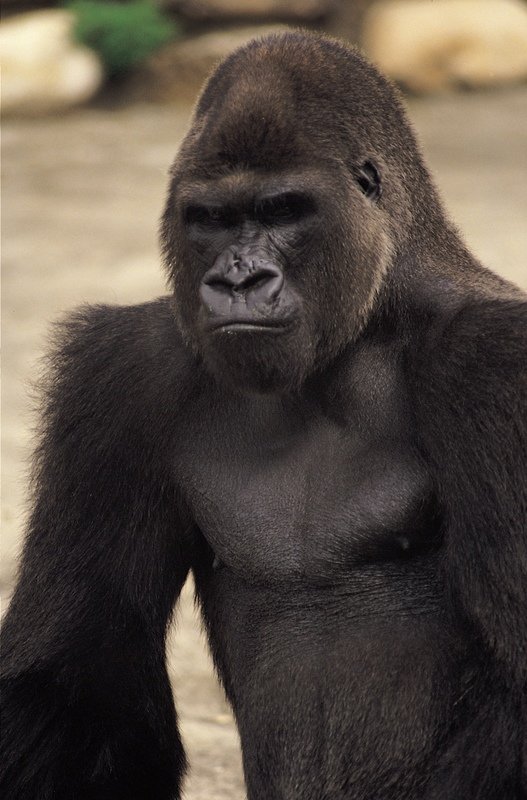
Gorillas All Around Me


Last Sunday, I watched a program on gorillas on PBS. They were telling how gorillas learn and pass on their teachings to the next generation. Zoos today try to have rainforests for their gorillas live in. The gorillas forage for their food, while their little ones play.

Since Sunday, I have encountered gorillas in many forms. First on a Simpsons TV show using King Kong as a character. Then, I was reading about Michael Jackson wanting to film a new version. Today, I received a calendar with Koko, the gorilla.

Koko learned sign language and can communicate with people. He understands who he is and who everyone else is.

So, since I encountered gorillas in four different ways, they have a message for me.

From Animal Teachers:
Gorilla teaches peaceful living. Remaining calm, He goes about his affairs. Even when a strange Gorilla shows up, He will not attack. However, Gorilla will state his position forcefully. Learn strength and gentleness from Him.

Gorilla’s Advice Also Includes:

“When Gorilla appears, it is a reminder that our own strengthens – our inner strength and nobility – are about to be recognized. Gorilla reminds us of the mobility of proper living for one’s family and community.” – Copyright: “The Animal-Wise Tarot”, Ted Andrews.

Saturday, October 22, 2005

Blue Jays are Back and Noisy as ever


Recently, I have been unable to sit up for long periods. So I have placed bread out on my balcony for the birds. For amusement, I watch them as they steal the bread or fight among themselves. A wren will come and fly off. Sparrows will mob the table for bread.

Recently, the blue jays have returned. They come, one at a time, grab a piece of bread and fly off. Then another one comes. They keep watching each other and squawk, when one of them is taking too long to eat. Once I saw two of them circling the table where the bread was. It reminded me of one of those duels that you read about.

I have enjoyed these noisy crafty birds. What I have discovered is how they are both thoughtful and obnoxious at the same time. For me, they seem to live double lives - the noisy squawker and the quiet parent. I have had a close relationship with them every since one dive bombed me since she thought I was too close to her baby jay.

Monday, October 10, 2005

Lost mole in the afternoon


I was next to the dumpster talking to my neighbor, when this little furry animal waddled by. It was a confused mole looking for dirt to tunnel in. He was on a road searching with his nose where his tunnels were. The local lawn service had dug holes in the ground, disrupting him.

The mole was a common mole, soft fur and a needle nose. His feed were big flat digging machines. He sort of waddled and twisted away. I picked him up and moved him to the grass.

Then I spent the afternoon making sure he found his way home. He did and I went home.

I marveled at the wonder of this little animal, soft to the touch, sniffing his way in the grass. Occasionally eating a tiny insect to keep his strength up. He seemed like a fairy from some other place who came for a visit.

Forest Preserve District of Cook County (Illinois)
Few people have ever seen a mole. That's because this strange animal
lives its entire life underground and is rarely dragged out into the light
of day. Sometimes we see those long, meandering ridges that it pushes
up in lawns and gardens but most of us have no idea what the creature
looks like.

The animal literally "swims" through the soil in its search for food. The
hands are brought forward alongside the snout, then thrust outward and
backward in a breast stroke, pushing the soil aside and pulling the
animal forward.

This industrious, hard-working animal has an enormous appetite. It has been reported to eat the equivalent of its own weight in food in a day,
but one-third of its weight is more probably an average amount. The
bulk of the diet consists of earthworms, white grubs, cutworms,
wireworms, and other insects.


Some of the folk lore meanings of moles are, "Depth, sensory perception, touch, earth wisdom, cheer, healing with roots, spiritual healing, self reliance, luck, Retrieval."
.

Sunday, October 02, 2005

Monster Spiders in the Daytime

I wrote on the spider web at my building. While taking my laundry from my condo to the nearby laundry mat, I encountered a monster spider web. This web extended from one tree to the building eave and wall. Smack in the middle of this web, was the largest, baddest cobweb spider that most people would see in their nightmares. This spider was busy spinning more webs to catch all of the flies in the area.

I can only admire the industry of this spider. She was going from tree branch to building side, spinning her cobweb. Bigger and bigger it became. I could only see the web of life in her activity. Now I understand why people consider Spider the weaver of life.