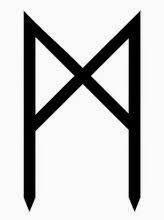
Showing posts with label Runes. Show all posts

Wednesday, January 06, 2016

Norse Runes: Runic Energies: Popular Culture


Fehu:       The TV Western, “Bonanza” is set in Virginia City, Nevada during one of the richest silver strikes in the U.S. The wealth of the Cartwright family is their ranch, The Ponderosa. 

Thurisaz:    “The Untouchables” (1956) with Robert Stack is riddled with Thurisaz energy. Treasury Agent Elliot Ness strives to bring justice to Prohibition Ear Chicago. Each episode depicts murder and brutality against innocent people.

Ansuz:     Yoda of “Star Wars” taught many generations of Jedi Knights from Ben Kenobi, Anakin Skywalker to Luke Skywalker. He was also the head of the Jedi Council.     
               
Raidho: The TV Western, “Rawhide” depicted the lives of drovers as they herd cattle along the Sedalia Trail (from Texas to Missouri). Each episode opened with the sight of the cowboys urging cows to move along the range.

Kennaz:    “Hell’s Kitchen” with Master Chef Gordon Ramsey is about choosing the best chef to run a new restaurant. Each week, Ramsey gives the chefs tasks to prove their skill and mastery in both cooking and running a restaurant.

Gifu: O’Henry’s short story, “The Gift of the Magi” tells of two poor newly-weds who struggle to give the other a gift of meaning. They sell their most prized possessions to give the other their loving gift.

Wunjo: Throughout the years, “Alvin and the Chipmunks” have brought children joy in their antics. Adults are amused by the high squeaky voices of the trio, and smile at their adorableness.

Hagalaz:       Moby Dick, the White Whale, terrorized the seas by destroying whaling boats. In “Moby Dick” by Herman Melville, this whale smashed the boats carrying Captain Ahab, his pursuer. Finally, Moby Dick killed Ahab and nearly all his crew by throwing his whale body on top of the craft. 

Eihwaz:         PBS “Frontline” presents controversial issues such as NSA spying for national security. The objective of the series is to have people think about these issues. They do that by presenting various points of views for their viewers to consider.

Perthro: The TV science-fiction show, “Quantum Leap” presented a protagonist trying to return to his own time and life. As he struggles to get home, he is forced to “leap” from time period to time period, and into the lives of different people. The “jumps” were completely random.

Berkana: The TV show, “Shark Tank” features investors willing to sponsor inventors. Each episode, several inventors present their ideas to the investors for consideration. A lucky few get funded for their work by the investors.

Othala: The legacy of Gene Roddenberry is the “Star Trek” franchise. Each show, movie, book, and comic presents his optimistic and hopeful view of the future. Furthermore, millions of people have responded to his vision by becoming ardent fans.

Monday, December 21, 2015

Norse Runes: Runic Engergies of Scorpions

Fehu:       The pet trade for emperor scorpions provides wealth for collectors.      
  
Uruz: As an Order, scorpions have existed on earth for at least 450 million years.

Thurisaz:    The scorpion uses its stinger to impart its venom.            

Ansuz:    Since there are almost 2,000 species of scorpions, each with its own variable venom, scientists have researched for the antidotes for each and every venom. 

Raidho: Scorpions have traveled worldwide by hiding cargo ships.  

Kennaz:   To hunt an insect, scorpions skillfully use their acute sense of smell and touch.

Gifu: Emperor Scorpions are given as pets.

Wunjo: Watching a scorpion leave its home permanently and go someplace else makes people happy.

Hagalaz:       Scorpions grab small prey with their pincers and crush their victim. 

Nauthiz:  Since they can only ingest liquids, scorpions use their venom to liquidate their prey.

Isa: Whilst hunting, scorpions remain still to detect the vibrations of their prey.

Jera: For 450 million years, the adaptable scorpion has lived on earth as an Order within the Arachnids.

Eihwaz:    Scorpions are solitary by nature.

Perthro: The variability of the venom for each species changes the probability of dying from a sting.
Elhaz: The scorpion’s stinger provides for defense against its enemies.

Sigel:   Energy occurs when a scorpion converts solid prey into a liquid pulp for digestion. 

Tyr: Since it takes weeks to liquefy its victim, a scorpion is patient and focused on the act of eating.

Berkana: A mother scorpion will protect and carry her scorplings up to 2 years. Her fertility enables scorpions to continue as an Order.

Ehwaz: Some people think that owning a fattail scorpion (one of the deadliest) enhances their status.

Mannaz: “Scorpion” is its identity with 2000 species divided into 13 families.

Laguz:          Venom flows out of a scorpion.

Inguz:  Scorpions reproduce in a spectacular mating dance.

Dagaz: The venom of the scorpion changes the prey from solid to liquid.

Othala: The legacy of the scorpion is its adaptability as one of the first land animals.

Friday, December 18, 2015

Norse Runes: Energies found in Palm Trees

By going deeper into Norse Runes, you can find their energies elsewhere. For example, palm trees.

PALM TREE

Fehu:  In ancient times, possessing a date palm tree was a source of wealth, since it provided food, clothing, utensils, oil, and wood.        

Uruz:  The durability of a palm tree is its many uses for people.

Thurisaz:         The leaves of some species of palm trees can cut flesh if the person is not careful.

Ansuz:       Palm trees have been important to humans by providing them with the means to live in arid areas and on islands worldwide. 
  
Raidho: Because dates are portable and energy dense, people carry them on caravans.    
       
Kennaz:    Since hybridization of palm species readily occur, the taxonomy of palm trees is problematic. Botanists need skill to organize them into meaningful genera, because there is flux amongst the entire group.

Gifu: The gift of the palm tree is its usefulness to humans. For example, people chew palm nuts, harvest wax, and make furniture from palms.

Wunjo:  Seeing an oasis of date palms in a dessert makes people happy.

Hagalaz: Coconuts fall from palm trees and hit the ground hard.

Nauthiz: Palm trees fill the need of hunger with dates, coconuts, nuts, and palm hearts. 

Isa: Palms are trees, and by nature are stationary.

Jera: Palm trees have contributed to mankind’s success in populating arid lands.

Eihwaz: With their shade, palm trees provide introspection by inviting people to sit under them.

Perthro: The probability of a palm tree dropping coconuts on a person depends on the wind, ripeness, the position of the person, amongst other things.

Elhaz: In South Carolina, sabal palmetto logs were used in building Fort Moultrie. The spongy wood absorbed or deflected cannonballs.

Sigel:   Palms wood is used for torches, and palm oil for cooking.

Tyr: Protecting endangered palms takes dedication since cross-pollination leads to hybrid species.

Berkana: In 2005, a 2,000 year-old date palm seed was successfully germinated.

Ehwaz: In ancient Mesopotamia, owning many date palms was a sign of status.

Mannaz: Scientists have grouped the 2,600 species of palms into the Monocot Order of Arecales. The Family Arecaceae has about 15 sub-families, with almost 200 genera.

Laguz: Palm wine, syrup and oil are made from palm trees. 

Inguz: The potential of palm trees lie in their multiple uses for people. 

Dagaz: The palm tree changed the future for humans by providing for their needs, and by being portable. 

Othala: Today, trees live in widespread places ranging from islands to deserts.
 

Wednesday, December 16, 2015

Norse Runes: Energies found in Hurricanes

By going deeper into the Norse Runes, you can see their energies play out elsewhere in life. This is one example:

HURRICANE
 
Fehu:   Hurricanes blow open inlets and form channels to allow ships into inaccessible areas. They bring wealth by creating new shipping lanes.

Uruz:   Measured in strengths up to Category Storm 5, hurricanes have powerful winds that can wipe entire cities.

Thurisaz:    Hurricanes destroy everything in their paths.      

Ansuz: Since hurricanes are so powerful, they encourage meteorologists to study them intently to predict their paths.

Raidho:   A hurricane transports water and debris great distances over oceans and lands. Also, these storms cross oceans to make landfall.

Kennaz: Predicting the landfall of a hurricane requires great skill.    

Gifu: The gift of a hurricane is water to replenish lakes and streams after a drought.

Wunjo: The happiest time for a hurricane is the clean air after the storm is over. Also, when a hurricane uncovers buried treasure, people are happy.

Hagalaz: Hurricanes bring heavy, pelting rains.

Nauthiz: A hurricane creates a need to rebuild after it passes. Also, to prepare for the eventual landfall of a hurricane, people need to find a sturdy shelter, and gather with plenty of supplies.

Isa: Sometimes a hurricane will stall over an area for days. Moreover, the eye of the hurricane is stillness amidst the swirling winds.

Jera: The hurricane replaces the water table in Central America, allowing for plentiful harvests. Hurricanes have beginnings and ends.

Eihwaz: Hurricanes propel winds and water across vast distances.

Perthro: The path of a hurricane is highly variable. A storm can turn direction at any time, and come ashore at any place without notice.

Elhaz: The circular wall of the winds keeps the hurricane from falling apart.

Sigel:   Hurricanes form over tropical seas, thereby transforming the tropical heat into moist winds. They actually become moving energy.

Tyr: Hurricane prone areas require discipline of the people who live there. They have to protect themselves against potential storms, and prepare for any that are arriving.

Berkana:        Hurricanes bring water to thirsty lands to allow for new growth. They transfer seeds and whole plants from place to place in a process known as plant dispersal.

Ehwaz: The status of a hurricane rises when it breaks a record in both winds and destruction. The storm’s name is retired from regular use. For example, Katrina, which destroyed New Orleans, will never be used again.

Mannaz: The identity of a hurricane lies in how well the storm is organized around its winds. Falling apart quickly turns a tropical storm into an unorganized mess.

Laguz: Hurricanes are storms that move long distances over water. They flow across the ocean.

Inguz:    The seed of the hurricane is warm tropical water. The potential of the storm is in the strength of its winds.

Dagaz: Hurricanes change the land that they blow over. They flood cities, destroy barrier islands, create new shorelines, and move beaches.

Othala: The legacy of a hurricane lies in how it changes the land. Also, the legacy is in how people remember it like Hurricane Andrew.

Friday, July 10, 2015

Runes: "Double Chevron" Spread

An explanation of Runes (opens new window)

For the third reading, I used another spread from Krasskova’s book. The Double Chevron spread, which consists of two intertwined “V’s,” helps people to look into the Well of the Wyrd and uncover any spiritual influences that are in their lives. In this spread, Runes 6, 7, and 8 intersect Runes 1, 2, 3, 4 and 5 at Runes 2 and 4. The corner Runes 1, 5, 6, and 8 are the external influences on the questioner. The interior Runes 2, 3, 4 and 7 are the internal influences coming from the questioner.

 My question for the Runes was “Do you have any guidance for me about my brain injury.” I am at a crossroads on what my direction in life should be now. I felt the need to consult the Runes about this.

 For the external influences, I drew (1) Dagaz, (5) Eihwaz, (6) Perthro and (8) Thurisaz. (Their traditional meanings are “day,” “horse,” “dice” and “thorn.”) Dagaz said to me to expect rapid change, and Eihwaz pointed out that the transformation will come from the Worlds. Perthro indicated that that source would be the Well of the Wyrd, whilst Thurisaz counseled that this would be a focused change.

 The internal influences were (2) Fehu, (3) Algiz, (4) Isa and (7) Hagalaz. (Their meanings are “wealth,” “elk,” “ice” and “hail” respectively.) Fehu told me of the connection from the Gods, one of which is protection (Algiz). Isa, to me, represented the dynamic interactions that are provided by having boundaries. Hagalaz told me again of the descent into the Realms of the Dead. As I go into those places, I will be protected with gifts from the Gods, which also includes firm boundaries.

From the entirety of the reading, I see that my injury placed me between the Worlds of the Dead and the Living, where I have a foot in both. My injury has transformed me and I must embrace it, instead of fighting it. Since public blogging is now an aspect of my new direction, I can be a voice for all the animals.

Thursday, July 09, 2015

Runes: Three Rune layout, "Hammer Spread (9 Runes)"

I usually do my divination in the afternoon after I have my tea. The ritual of afternoon tea puts me into a reflective frame of mind. After tea, I would cleanse my divination space, lay out my cloth, put crystals out for clarity of signal, and finally light a candle. After doing the Hammer Rite for protection, I arranged myself to do Runic divination. After asking my question, I would pull each Rune out of the bag. When I laid them on the cloth, I would ask the Norns to bless my reading.

 For the first divination, I did the Three Rune drawing. I asked, “What guidance can you give me about having a high profile blog?” I was nervous about blogging about animals on a public platform.

As I was shuffling the Runes in the bag, Uruz jumped out. I put that Rune aside; then I drew out Eihwaz, Gebo, and Kenaz. To interpret the Runes, I consulted Galina Krasskova’s book, “Runes: Theory and Practice.” The standard meanings for Eihwaz is “yew,” Gebo “gift,” Kenaz “torch,” and Uruz “strength.” Going deeper into the Runes themselves, Eihwaz became for me the Yggdrasil, the axis mundi of the Worlds, the World Tree itself. Gebo, then, is the gifts from the Gods, with the “X” indicating that we are acting in a partnership. Kenaz is now the spark of the Divine leading me. Uruz is important since it grounds these other Runes by establishing boundaries for Them to work in.

From these Runes, I formed the sentence for my reading: “From the World Tree, I am given the gift of connection with the Divine. Therefore I can write knowing that there are firm boundaries to protect me. The Runes answered my deeper issue of being able to deal with the public.

For the next two divinations, I used two spreads featured in Krasskova’s Rune book. However, now, I set up a small altar in my divination space. The Runes informed me that They were more than simply divination tools, and wanted to be accorded the proper respect. To explore in depth, about being in the public eye, I used the Hammer Spread. I asked, "What spiritual challenges are there for me for being so public." The Hammer Spread has Runes 1, 2, 3, 4, and 9 in a vertical line with Runes 5, 6, 7, and 8 crossing at Rune 4. Runes 1 through 4 are the spiritual lessons for me to learn, Runes 5 through 8 are the physical manifestations of this spiritual lesson. Rune 9 at the top is for anything else that the Runes may have to say.

The Runes detailing the spiritual lesson were (1) Wunjo, (2) Hagalaz, (3) Othala and (4) Algiz. (The traditional meanings for these Runes are “joy,” “hail,” “family estate” and “elk” respectively.) Wunjo, for me, is the mystical Tree working through me whilst Hagalaz is the shadow work with the Dead. (After my brain injury, I have been blogging about extinct animals.) Meanwhile Othala becomes the protective boundary that the Ancestors surround me with, strengthened by Algiz, for things of the spirit. These Runes are telling me that the Great Tree will bring forth my work with the Dead (including animals), with the protection of my Ancestors.

For the physical manifestations of this lesson, I drew Thurisaz, Ansuz, Gebo, and Uruz. (Traditional meanings are “thorn,” “God,” “gift” and “strength.”) I interpreted Thurisaz to mean swift and contained fortitude, with Ansuz, opening my voice. Gebo gives balance for my struggle, whilst Uruz gives me strength to transform. With fortitude, my voice will become balanced and strong.

 For Rune 9, I drew Tiewaz (“Tyr”), which means for me, “moral clarity.” When I blog, I should be scrupulous in what I write. The Hammer Spread helped me to gain insight in what was bothering me about blogging. I was counseled by the Runes to forge ahead in this endevour.

Monday, June 09, 2014

Divination: Norse Runes: 12 Rune Life Layout

Because my life is in flux, I decided to do the Twelve Rune Layout known as “the Runic Wheel” for a life reading. “The Runic Wheel” is ideal for me to read accurately and wisely. I did the layout on May Eve (Walpurgis Night), since it marked the change between the light and dark halves of the year for the Norse. This crack in time was a good time to do a life reading.

 As I prepared to do the reading, I laid the Runes out counter-clockwise as directed by the layout. I noted each triadic grouping as well as any natural grouping such as “Self,” “Health,” and “Relationships.” During the divination, I looked for any particular messages from the Runes.

 Starting at the Nine o’clock position of “Self,” I drew Ansuz. For me, this Rune means that I am under the protection of the Gods. After I became injured, I felt the presence of the Gods come into my life. They have been guiding my life since.

 At the Eight o’clock position of “Material Position,” I drew Ehwaz. I interpret this Rune as “movement and adaptability.” Any new ventures that I start would be successful. However, I need to seek cooperation from other people to reach my goals.

 At the Seven o’clock position of “Communication,” I drew Isa. Because of my brain injury, communication with others is difficult. Isa reflects this blockage in my brain. What this Rune counsels me is that I need to wait first before speaking, so I do not stutter. 

 At the Six o’clock position of “Family and Home,” I drew Uruz. My family is like the wild Aurochs represented by Uruz. We are strong, passionate, and mentally ill. Managing our illnesses is like riding the Aurochs, but together we are able to do it.

 At the Five o’clock position of “Pleasure and Creativity,” I drew Berkano. This is the Rune of birth and rebirth. For six months, I have been struggling with a long fallow period of doing nothing. My zest for being creative has been noticeably absent. Drawing Berkano gives me hope that I should see the start of renewed creativity and the desire to write again.

 At the Four o’clock position of “Health,” I drew Dagaz. For me, Dagaz means “breakthrough, relief or some sort of dramatic life change.” Since my brain injury affects my over-all health, it makes becoming healthy, problematic. Because of this, I have made very slow progress in returning to good health. This Rune tells me to expect positive changes and improvement.

 At the Three o’clock position of “Relationships,” I drew Nauthiz. My brain injury creates difficulties because I miss social cues, frustrating me and other people. Nauthiz, the Rune of “need and obstacles,” informs me to be patient and use as much self-control as possible.

At the Two o’clock position of “Sex Life,” I drew Othila. For me, this Rune means “a sense of belonging, legacy, the Ancestors.” As I pondered this, I decided that the Ancestors are with me and want me to enjoy my husband. After all, that is how our line is continued. (This is their legacy to me.)
 
At the One o’clock position of “Ideals and Dreams,” I drew Mannaz. I understand this Rune to be “family and community.” My ideals and dreams arise from supporting my family and community. By serving my community, I can achieve my own ideals. 

 At the Twelve o’clock position of “Ambitions and Aspirations,” I drew Wunjo. For me, this Rune means “success and joy.” I was stumped as to how to interpret this Rune in this position. “Joy” could be a goal for me. I intend to do something joyful each day such as bird watching.
 
 At the Eleven o’clock position of “Friendships,” I drew Jera. This Rune means “harvest,” which I interpret to be: “I will reap the benefits of my friendships.” By maintaining the high quality of my relationships, my social life will improve. 

Finally at the Ten o’clock position of the “Subconscious,” I drew Kenaz. A part of my injury is being disconnected with parts of my brain. Kenaz, “the Torch,” will help me to illuminate these parts. Eventually, I will become more integrated, and more in touch with my subconscious.

 Looking at the Triads, several pictures emerge. From “Self” to “Material Position” and “Communication” flow Ansuz, Ehwaz, and Isa. From the Gods come my material comfort. However, I need to be still and ponder my good fortune.

 From “Family and Home” to “Pleasure” and “Health” flow Uruz, Berkano, and Dagaz. Deriving strength and robustness from my family, I can be reborn into a new period of creativity. By being reborn, I will receive a breakthrough in my recovery from my brain injury.

 From “Relationships” to “Sex Life” to “Ideals and Dreams” flow Nauthiz, Othila, and Mannaz. Because of the obstacles of learning social cues, I need to be in contact with my Ancestors. From them, I receive a sense of belonging. Now I can support and be supported by my community. 

 From “Ambitions and Aspirations,” “Friendships,” and the “Sub-conscious” flows Wunjo, Jera, and Kenaz. Since I seek harmony, I will harvest good friendships. With the help of my friends, my subconscious will be illuminated to me. 

 The Triads present a cycle building up to confirm that my struggles in relating with others will be rewarded. The connections between me and other people will improve. As long as I honor the Gods and the Ancestors, I will have a synthesis of vitality and testing which will help me overcome my ordeals in communication.

 The Runes for communication and relationships includes Isa and Nauthiz, reflecting my handicap. However, balancing this out is Jera, which tells me that if I am patient, I will reap a good harvest. Meanwhile, the Runes of self and the subconscious is Ansuz and Kenaz, which says to me that the Gods will connect me to myself. Adding to this is my sex life denoted by Othila, the Ancestral Home. My life may be in flux now, but this is necessary for me to achieve a breakthrough as denoted by Berkano and Dagaz.

Saturday, May 03, 2014

Divination: Norse Runes: Six Rune Layout

 Six Rune Layout is the same as the Five Rune Layout with the sixth Rune under the fifth one.
The Five Rune Layout

To find out what Odin had to tell me, I did the third Rune casting on Wednesday. My question for Odin was, “How do I learn to handle future conflicts.” Using the Six Rune Layout, I cast the same layout as the Five Rune one, and added, “Fresh Influences Affecting the Situation.” “Present” was Eihwaz, while “Past” was Berkano, “creating a new life.” “Help” was Kenaz, “insight and solutions,” while “Fate” was Mannaz.  The “Result” was Fehu, “wealth and good fortune”. Meanwhile, “Fresh Influences,” was Mehwaz, “change and adaptability.” Odin is telling me to use creative thinking and group support, and I would become wealthy in my relationships.
-------

The common theme in my Runes castings was Hagalaz, Eihwaz, and Mannaz. This crisis has caused me to assess my overall situation as a person with a brain injury. I need to be patient with myself and others. With the support of the group, I will be able to grow from this conflict, and handle other ones as well.

------------------
NOTE: A more experienced Rune caster noted the following "Well done, however, when trying to compare things (such as the advice you would receive from three different deities), it's best to change just one variable at a time. So, for example, you could try to see how different lay-outs would work on the same day for the same deity OR you could try to see how the same lay-out would work for different deities on  different days OR you could try to see how slight changes in the wording of your query change the outcome. As it was, you changed three variables (the days, the wording of the query, and the lay-outs), so now you do not accurately know which variable changed the outcome."

Wednesday, April 30, 2014

Divination: Norse Runes: Five Rune Layout

 Five Rune Layout          3
                                2    1    4
                                      5


To seek out Freya’s advice, I did the Five Rune cast on Monday. I asked, “What can I learn from this conflict.” The Five Rune Layout adds “Help” and “Fate” to the Three Rune Layout. The first Rune was Gebo, “gift,” the second Othila, “the ancestral legacy,” and the third Perthro, “luck.” “Help” was Hagalaz, while “Fate” was Nauthiz, “need, hardship.”

Looking at the layout, I see that this conflict is a gift. Help in the form of a crisis means that the group therapist can see how we fight and guide us through our conflict. Acknowledging our legacy means recognizing that we have injured brains, which greatly affects our perceptions. My fate was that I needed to experience this conflict to deal with my strong emotions. Perthro, Freya’s answer to me “dare the fight,” i.e. take the chance.

------------
To read the introduction to these divinations: Three Rune Layout


Monday, April 28, 2014

Divination: Norse Runes: Three Rune Layout

 Three Rune Layout:  1  2  3

To practice Rune casting, I used several Runic layouts – the three, five, and six tile ones. I did the readings in one week on particular days. (Saturday was the day of the Norns, Monday – Freya, and Wednesday - Odin.) Focusing on a single problem, I wanted to see if the answers from these various Gods would differ. I wanted advice on my conflict with another person in my therapy group for people with brain injuries.

The questions I asked for each casting focused on how I could handle this conflict and to learn from it. Processing strong emotions with an injured brain is difficult. I often find myself screaming and shaking at small irritating things, which is normal for people with brain injuries. In my therapy group, my goal is to learn how to deal with strong emotions in a constructive way.
 
To consult the three Norns, I did the Three Rune Layout on Saturday. I asked “What do I need to do to not react to this person’s provocation.” The first Rune, “The Root of the Problem,” was Hagalaz, meaning “chaos, crisis, and sudden change.” The second Rune, “the Present Situation,” was Eihwaz, “reassess the situation.” The last tile, “The Most Probable Outcome,” was Mannaz, “the support of the family.” The Norns were telling me to head off disaster by delaying my reaction, and to instead seek help from the group. By me asking for the group’s help, we could all learn about regulating strong emotions. 


Wednesday, March 19, 2014

Norse Runes: Attunement


My sense of the Runes is that they tell a complete story of the Wyrd of the Well. My goal as a diviner is to uncover this story, and find meaning in it. I regard the Runic Aettir as chapters in this story, with the individual Runes as sentences. (For me in Runic divination, the questioner is a thread in the tapestry of the Wyrd.) I need to attune to the Runes to discover how the questioner’s thread fits into the overall Story.

 To prepare for the attunements, I decided that the time to do them was early in the morning. For me, the early morning is a liminal time, and my brain is fresh and open. Therefore, after my morning tea ritual, I would sit with the Runes.

For the attunement, I decided to do two Runes at a time. By learning in pairs, I could study them as a dyad. As I did, I would ask myself, “how do these Runes fit together.” I would contrast and compare each, as well.

 First, I would lay out the entire Rune set to see how the Story develops. Then, I would take the pair of the day, and ask that these Runes speak to me. As their pictures would form in my mind, I wrote down my insights. As each Rune developed into a full picture, I placed it in my memory palace.

For me, the meanings of the Runes lie on a continuum. I regard the meanings of each Rune to be fluid with a center, end, and beginning points. The center point is the “standard” agreed upon meaning. The “standard” meaning also governs the beginning and end points. As a diviner, I see shades of meaning from either side of “standard.” Therefore the Runic insights that I got were usually variations of this “standard.”
 An example of how this works for me is as follows. Hagalaz (“hail”), Nauthiz (“need”), Isa (“ice”), and Jera (“harvest”) can be viewed as one chapter of the Runic Story. These Runes can flow together to form a picture. Depicting disaster, Hagalaz is the hail pounding on the roof, causing the roof to cave in. After the roof falls in, the fire goes out in the home. Now the home owner has to make a “need” fire (Nauthiz) by rubbing two sticks together. While everyone, in the home, waits for the fire, they are “frozen,” much like the ice (Isa) that hangs from the eaves. When the warm weather comes, the ice melts, watering the fields. Jera is the field that becomes ready for “harvest.” Through these four Runes, the chapter of a cycle turning and a new one beginning is depicted.

 For me, an attunement is to go inside each Rune to hear the story that each tells. Then, the Runes become pictures or scenes, which resides in my memory palace. When I access them, the Runes flow from one to the next, each telling me what I need to know.

Monday, February 17, 2014

Divination: Norse Runes: Consecration Ritual write-up


 In order to consecrate my Rune set, I first researched how to conduct a Norse ritual. I also looked up what Gods governed the Runes and divination (in general). Afterwards, I wrote a simple ritual to ask the Gods to consecrate my Runes.

 To prepare for the ritual, I first took a bath. (As a Roman Pagan, I believe that ritual purity is important. For me, it is a part of showing piety to the Gods.) Then I cleansed the area where I would do the ritual. While preparing my ritual space, I laid out my divination cloth and Runes. Setting up an incense burner and lighting a candle, I then played several pieces of classical music to appease the Gods. (Roman Pagans play music to cover any imperfections during the ritual.)

 When I was finished setting up my sacred space, I hallowed the ritual space using the Hammer Sign. Calling on Thunor (Thor), the God of Thunder, I asked Him to protect the space for the duration of the ritual. Offering incense to Sibb (Sif), the Wife of Thunor, I asked Her to sanctify the space. (My relations with the Gods of the Runes are with the Anglo-Saxon Gods.)

 After doing that, I hailed the Anglo-Saxon Gods who govern the Runes and divination. They are Woden (Odin), who brought the Runes to the Worlds, Frige (Frigga), who read the Runes but kept her own counsel, and Freo (Freya), who is a Seidhkona (a Norse shaman). Freo is, also, noted for unraveling the Wyrd (fate) of people.

I regard the Norns (Fates) to be the most important for consecrating the Runes and for guiding their use in divination. These “Weavers of the Wyrd” are Urahr (what has become), Verdhandi (what is becoming), and Skuld (what shall be). For the Norse and Germanic peoples, They are the Weavers of our fates (Wyrd). To honor Them, I read a verse from the “Voluspa,” of the “Poetic Eddas.”

 Since for me, the Runes are drawn from the essence of all Nine Worlds, I, also, wanted to dedicate them to the Worlds. During the ritual, I hailed each of the Worlds and asked them to imbue their essence into my Runes. As I did, I could feel the energy of each world flow into my tiles.

 Then I consecrated each Rune, one by one. To do so, I first traced the Rune letter over each tile. As I chanting their name, I held each in the air to be blessed. After saying the meaning for each Rune, I asked that the Gods  that it would be “read right” and be worthy of the Well of the Wyrd (Fate).

 To finish the ritual, I bid farewell to each of the Gods. Then I asked Sibb and Thunor to return my ritual space back to ordinary use. Blowing out the candle, I ended the ritual and put everything away. While putting the Runes back into their bag, I could feel their renewed connection to the Well of the Wyrd.

This ritual can be found at : Runic Consecration Ritual

Sunday, February 16, 2014

Divination: Norse Runes: Consecration Ritual

Runic Consecration Ritual
1.      Hallow space with Hammer Sign +
“Hammer in the North, Hold and hallow this stead”
(Directions: east, south, west, above, and below)
Hail Thunor (Thor), the Thunderer, protect this space.
 --
2.      Cleanse space.
Hail Sibb (Sif), Wife of Thunor, may this space be sanctified.
Offer incense
 ---
3.      Greet the Gods and Others
Hail, Woden, the All Father!, May I honor your Gift and Sacrifice of the Runes
Hail Frige, Shining Lady of Asgard, May I show discernment in reading the Runes
Hail Freo (Freya), Shining Lady of the Vanir, May I be deft at understanding the Wyrd.

 Hail, Urdhr, Norn of What has become
Hail, Verdhandi, Norn of What is becoming
Hail, Skuld, Norn of What shall be.

“From there come the maidens
With knowledge of many things
Three from that sea,
Which stands beneath the tree;
One is called Urdhr,
The other Verdhandi,
They carved on sticks,
Skuld the third.
They laid down the law,
They choose the lives
Of the children of men,
The fates of men.”
Voluspa” Verse 20
---
4.      Consecrate the Runes by tracing a figure over them, and saying each out loud.
---
5. Working May these Runes draw from each of the Nine Worlds,
Midgard, the World of men,
Muspellheim, the World of raging fire, Niflheim, the World of freezing cold,
Asgard, the World of the Shining Ones, Vanaheim, the World of the Fertile Ones,
Jotunheim, the World of the Giants, Svartalfheim, the World of the Dark Elves, Ljossalfheim, the World of the Light Elves,
and Hel, the World of the Dead.

May these Runes be worthy of the Well of the Wyrd.
May these Runes read right!
 ----
6.      Open space to ordinary time and place
Hail and Farewell All!
Hail and Farewell, Woden, the Wise One
Hail and Farewell, Frige, the Frith Weaver
Hail and Farewell, Freo, the Seidhkona
Hail and Farewell the Norns, the Weavers of the Wyrd.

Hail and Farewell Sibb, Lady of the Golden Hair, may this space be ordinary
Hail and Farewell Thunor, Son of the Earth, may this space be ordinary
 --
Please note that I use the Anglo-Saxon names of the Gods since They are the Ones I am most familiar with.
 ---
Works Used:
Aswynn, Freya, “Northern Mysteries & Magick,” Llewellyn, Woodbury, MN, 1998.
Kaldera, Raven, “The Pathfinder’s Guide to the Nine Worlds,” Asphodel, Hubbardston, MA, 2007.
---, “Voluspo,” “The Poetic Edda,” Sacred Texts, http://www.sacred-texts.com/neu/poe/poe03.htm.
Krasskova, Galina, “Exploring the Northern Tradition,” New Page Press, Franklin Lakes, N.J., 2005.
Wild, Sean, “The Runes Workbook,” Thunder Bay, San Diego, CA, 2004.

Wednesday, December 18, 2013

Divination: Norse Runes: The Nine Worlds

Before my brain injury, I wove altar cloths using wool on my lap loom. As I wove, I meditated on what I was creating. During these times, I could sense the Norse Goddess Frigga whispering to me. As the Lady of Asgard, Frigga would guide my efforts, since She holds the Distaff. Eventually, the All-Mother became my Matron.

After I made my Runes, I decided to weave a divination cloth in Frigga’s honor. To ascertain the colors for this Goddess, I consulted Freya Aswynn’s “Northern Mysteries and Magick.” Aswynn said that silver grey was the color for Frigga. I also researched various depictions of Her. I noticed that many featured blue, gold, and white, which were symbolic of her position in Asgard. The green and red of the divination cloth was requested by Frigga to honor the women, as the Keepers of the Household, with their blood and fertility. Then with her Blessing, I wove this cloth for my Runic divination.

 For storing the Runes, I purchased a linen bag and a wooden box (to put the bag in). Although both were undecorated, I felt the Runes (Who I came to see as living entities) wanted a depiction of the Nine Worlds on each. My sense was that the Runes belong to all of the Nine Worlds, from which They gain their substance. After reading Raven Kaldera’s “The Pathfinder’s Guide to the Nine Worlds,” I understood that the Runes also holds the essence of the Worlds in Themselves. Therefore, I think that it was appropriate to have symbols of the Nine Worlds on the box and bag.

 I used two different artistic mediums for the bag and box. I employed magic markers for the bag, and painted the box with tempura paints. Using Kaldera’s narratives, I was able to envision representative colors for each World. Hel, the Land of the Dead, is black and white. (It is the Ninth World, where all the Dead of the Worlds go.) I placed Hel’s symbol in the center of the bag and the bottom of the box. Muspellheim, the Land of Fire, is the orange and red circle. Niflheim, the Land of Ice and Fog, is white and blue (box) or blue and white with a fork (bag). These Worlds are near Hel, and on either side of the box.

 For the worlds of Ljossalfheim, Vanaheim, and Asgard, the circles all contain yellow to represent the golden auras of these worlds. The world of the Light Elves, Ljossalfheim also has green, the traditional color for elves. Vanaheim, the land of the Vanir, includes brown for its fertile fields of grain. Asgard, where Odin the All Father lives, is white symbolizing the shining world of the As.

 Since Jotunheim is similar to Midgard (according to Kaldera), I painted the two worlds green and blue. Midgard, the home of the Humans, is green on the left, and blue on the right. Jotunheim, the land of the Jotuns, is blue on the left, and green on the right. On the bag, the world of the Jotuns is green and brown.

 Svartalfheim is shared by the Dark Elves and the Dwarves. Brown is for the Dwarves, who live underground on this world. Meanwhile, dark green is for the Dark Elves. On the bag, Svartalfheim is red and purple for the forges of the Dwarves and the darkness of the Elves, respectively.

 After I decorated the box and the bag, I placed the Runes first in the bag, then in the box. After They resided for some time in the bag/box, the Runes seemed, to me, happy. I also felt that their power had increased since They were now connected with the Nine Worlds.

 Works Used:
Aswynn, Freya, “Northern Mysteries & Magick,” Llewellyn, Woodbury, MN, 1998.
Kaldera, Raven, “The Pathfinder’s Guide to the Nine Worlds,” Asphodel, Hubbardston, MA, 2007.
Wild, Sean, “The Runes Workbook,” Thunder Bay, San Diego, CA, 2004.
Please note that I decorated the box and bag for this assignment.
Asgard and other worlds
image of box lid and divination cloth
 bag og the worlds
image of the worlds

Thursday, November 21, 2013

Making Norse Runes


A few years before my brain injury, I explored several methods of divination. For a Rune class that I was taking, I had to make a Rune set, that consisted of the Elder Futhark (the original Norse Runes). In the class, I learned that the World Tree of the Norse (Yggdrasill), the Tree that Odin hung on to receive the Runes, was an Ash. Therefore, I chose ash as the wood for my Rune tiles.

Since the tiles I chose were precut, I only needed to sand and then carve the Rune letters into them. After practicing writing each Rune, I wrote each letter on a tile. Some of the more complex Runes – Perthro and Mannaz for example – took more care and time. I regarded my practice of writing the Runes as learning a new alphabet.

My instructor told us to stain the tiles with red stain and blood. He said that the blood would make the Runes come alive for us. I carefully pricked my finger and dripped the blood into the stain. I used all of the stain-blood mixture on the Runes.

Later, I found out that what I did was blood magick, since the blood bound this set of the Runes to me. The only way, I could break the bond was to burn the Rune set. Next time anyone suggests using blood, I would ask more questions. I learned later that I could have done a ritual of prayers to consecrate the Runes, and have them become living entities.

Tuesday, November 18, 2008

Cattle: Many Gifts


(Uruz, Fehu)

COW (Bovine Family): Many Gifts

Wild and Domestic Bovines have provided nourishment for people’s minds and bodies since Prehistory. These large Cud Eaters are at home nearly everywhere. Relatively low maintenance, Bovines breed well in captivity. Moreover, They can convert plants into nourishment for Themselves and people.

Providing milk, meat, hides and fuel, Bovines formed the foundation for many civilizations. Domestic Cows not only supplies meat and milk to people, but homes and fuel as well. In treeless areas, cow patties are used for fires. Meanwhile, Oxen plow fields and pull carts. Mongolians rely on Yak for everything. The Masai say that all Cows were given to them from N’gai, the Great God. Hindus see Zebus (Tropical Cattle) as “Second Mothers”.

Early Europeans tested their strength against Aurochs, the ancestor of today’s Domestic Cattle. Paintings of powerful Aurochs decorate caves of European Prehistory. Once roaming all of Eurasia, the last Aurochs became extinct in Poland in 1620. Aggressive and powerful, Aurochs became the Norse idea of strength (the Rune Uruz).

The closest relatives to the Aurochs today are the White Cattle of Chillingham. In his Herd, Bull rules his Harem like royalty. Only when He dies does a new King emerge. Meanwhile Cow leaves her herd to have Her Calf. When She is ready, Bull will escort Her and Her Calf back and introduce Them to the herd.


Because of what They have provided humans, Bovines are considered a symbol of wealth. In the Norse Runes, Fehu (cattle) meant wealth. Therefore cattle stealing became a crime worthy of death and of warriors. In stories of the American West, rustlers were hung. Ancient Greeks sang about the boldness of Hermes (Mercury) stealing the Cattle of Apollo (God of the Sun). The Cattle Raid of Cooley (Ta’in Bo’ Cuailnge) was the central epic in the Ulster Cycle of Irish literature. Stealing Cows from other tribes became a part of Masai culture.

Bovines offer people many gifts - of material wealth and of the imagination. The humble Cow feeds people meat and milk. Wild Aurochs feed the imagination of daring and courage. Together, They offer people the gifts of life.

Wisdom of the Cow Family Includes:
Strength
Interspecies Cooperation
Foundation of Life
Nourishment

Science Notes:
Wild Bovines includes: Gaur (Bos gaurus), Banteng (Bos javanicus), and Aurochs (Bos primigenius).
Domestic: Cattle and Zebu (Bos taurus), and Yak (Bos mutus)

-----------------------

Copyright: Virginia Carper, Animal Teachers, 2008

From Universal Class, fun self-paced classes taught by me:

Finding Your Animal Teachers

Animals For Everyone: Mammals

Sunday, February 18, 2007

Meditation

Introduction

My meditation begins with divination. Depending on the season, it could be a layout of Tarot, Oracle cards, Runes, stones, or Ogham staves. (In the summer, I go on a nature walk and commune with the animals I encounter.) This helps me to attune to worlds beyond this one. For me it helps to flow with the energies of the season for the purposes of meditating.

I begin by laying out my divination cloth. Then I light a candle and stare at the flame to clear my mind. Once I do the spread, I study the omen. Then, I flow into the world of the spread and listen to the whispers. As that world of the Kindred is laid out before me, I hear their whispers and murmurs.

Winter

Since Yule time is when the Norse Gods are the closest to Midgard, I use the Runes. For me, the laying of the Runes is entering into the world of the Gods. Odin the All-Father, obtained the Runes at a great cost. Before laying out the Runes, I ask the Norns to help with my choosing.

The Runes are an alphabet, forming words that give insights from the Gods. Within each word are layers of meanings that create a sentence. In the depths of the sentences, whisper the voices of the Norse Gods, revealing Their Thoughts.

Also in winter, I use stones. Because this is the season of introspection and quiet, I can hear their voices without distraction. When they sing, “pick me”, I take the stones from a pouch. Then, I “throw” them and watch where they land on a layout of compass directions. (Each direction has a meaning: North-spirit, East-mind, South-body, and West-emotions.) Then I ask each one what they have to say to me. The stones tell me through their colors, shapes, and how they twinkle. I enter their world, and hear their songs. I discover their personalities as well. For example, uptight malachite sings its advice in a clear tenor.

Spring

In spring, life awakens from its slumbers and comes alive. The first to make themselves known are the flowers. Therefore, I use the “Flower Speak” and “Flower Spirit” oracle cards. “Flower Speak” employs pictures, while “Flower Spirit” uses photos to convey their meanings.

In the beautiful photos of “Flower Spirits”, the author has portrayed ‘the essence of each flower. I use these cards in early spring to remind myself of the world that awaits me. Because the deck is divided into annuals, perennials, bulbs, and wild flowers, this adds the dimension of various timelines. When I do a spread, it becomes a riot of color and movement. Each picture melds into the next, as the flowers dance and weave. I join them in their spirited dance.

The Flower Oracle has beautiful drawings of flowers with their representative meanings. The deck also includes the phases of the moon, and the phases of plant growth. This gives a sense of time of what is yet to come and how it arrives. In each spread, I travel from card to card absorbing the energy of each card.

Summer

In the summer, I go outside on a nature walk. On my morning walk, I encounter a wide variety of animals. I generally stop and commune with them. For example, encountering a garden snake, I stop and quietly breathe with the snake. In and out I breathe until I become one with the snake. Seeing life on the snake’s level, we converse about the warm sunshine and the local rat population.

On another morning, I watch the dragonflies at the forest edge. When a dragonfly alit on the fence, I started breathing with the dragonfly. Breathing in unison, I became a dragonfly, glowing bright blue and green. I flew with the other dragonflies eating insects on the wing.

Fall

In the fall, the trees change their leaves. To me, they speak about the passing of summer and the coming of winter. In this moment, time stands still. Therefore, I choose the Ogham staves and “Tree Magick” Cards to meditate with.

As the sacred alphabet of the Celts, the Ogham is related to the trees and plants of Europe. As I lay out the Ogham staves, I hear the voices of the Kindred murmuring through the trees. The Ogham letters form words in tree language. Elms speak of stretching to the sun, while oaks talk of strength. As I meander among the staves, I feel the Divine Ones speak to me.

In “Tree Magick”, the trees of the world are separated into ‘heaven’ and ‘earth’ trees. Also, each card has a tree with an animal about it. In exploring the world of each card, I enter into the being of the tree. Using this deck becomes a way of exploring the Two Powers, especially when the heaven and earth trees come together. Moving from earth to heaven (and back again) helps me to embrace and mingle the Two Powers. The trees merge their energies into a whirlpool. I become a leaf flowing in the pool, going where the trees take me. Finally I release the energy and come back to me.